
The image crossed borders in minutes: Nicolás Maduro detained, escorted by international forces, while from Washington President Donald Trump set the tone of the moment with a brief post on social media.
This event, unthinkable just a few months ago, opens an unprecedented chapter for Venezuela and raises profound questions about power, legality, human rights, and political reputation on a global scale.
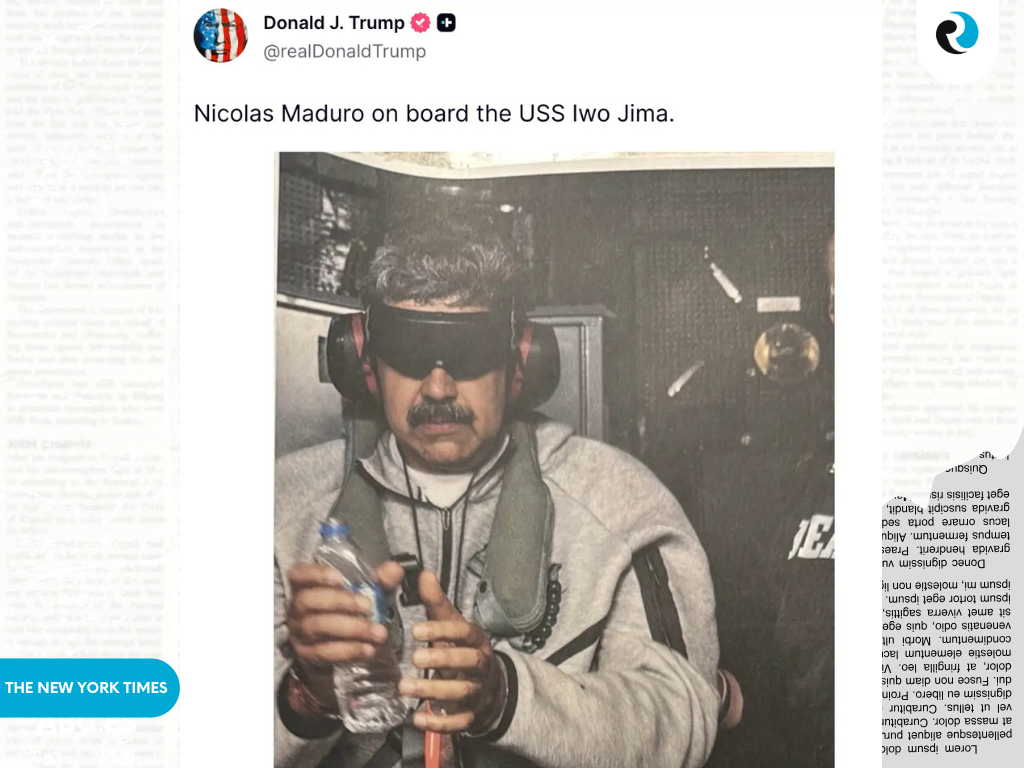
An arrest that repositions forces on the international stage
The capture of Nicolás Maduro comes after years of documented reports of repression, political persecution, and systematic human rights violations .
The operation, of which only carefully measured fragments are still being revealed, was confirmed by US and Latin American sources.
Are we witnessing the end of a political era or the beginning of a new regional crisis?
Power in Caracas: a presidency questioned by the state of human rights
Following the arrest of Nicolás Maduro, the Venezuelan presidency enters a transitional phase marked by persistent allegations of human rights violations .
Although the interim government seeks to project institutional continuity, national and international organizations point out that the mechanisms that facilitated political persecution, repression of protest, and harassment of the independent press have not been dismantled .
Recent reports warn that arbitrary arrests, the use of paramilitary forces, and the absence of full judicial guarantees remain, limiting any expectation of immediate democratic normalization.
The presidency now faces a challenge that transcends the management of power: to demonstrate with actions —not just declarations—that respect for due process, civil liberties, and the protection of fundamental rights will be a real part of the political agenda, after years of documented complaints that have eroded the institutional credibility of the State.
Trump and the reputational capital of force
Since his return to power, Donald Trump has insisted on projecting determination and international authority .
The reputational impact is immediate. For Donald Trump, the episode reinforces his image as an unpredictable but effective leader, a figure who acts where others hesitate. For his critics, however, it raises questions about legal precedents and the use of extraterritorial power.
How world leaders interpreted Maduro’s capture
International reactions to the arrest of Nicolás Maduro revealed a range of divergent criticisms that reflect political priorities and different interpretations of the international order .
From Europe, President Emmanuel Macron questioned the method used for the capture , warning about the risks of weakening multilateralism and respect for international law , a concern shared by several European Union governments that called for greater institutional coordination.
In Latin America, the tone was less uniform: while leaders like Javier Milei celebrated the arrest as a symbolic break from regional authoritarianism, other presidents, including Gustavo Petro, expressed reservations about external intervention and stressed the need for a political solution that does not lead to further instability .
From Oceania, Australian Prime Minister Anthony Albanese called for a peaceful transition with guarantees of human rights , while voices from the international arena insisted that, beyond Maduro’s personal outcome, respect for due process and fundamental freedoms must remain a central criterion for evaluating the consequences of this historic decision.
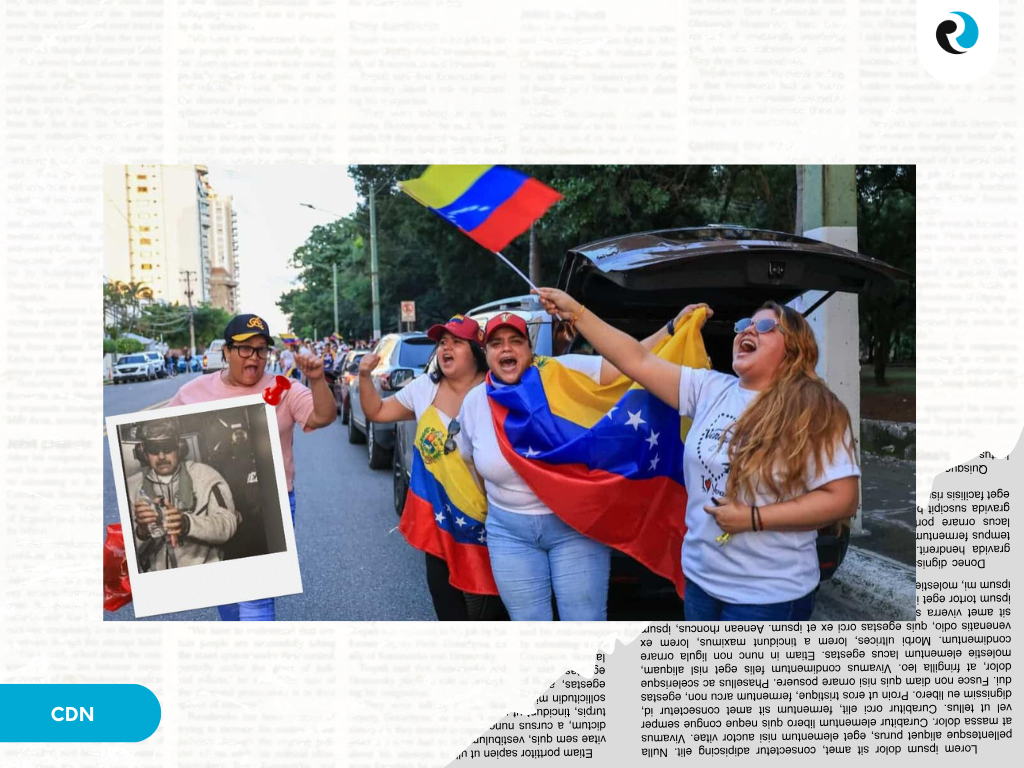
Maduro: from absolute power to total isolation
For Nicolás Maduro, the arrest represents the definitive collapse of his public image. For years, the Chavista communications apparatus attempted to construct a narrative of resistance and sovereignty. Today, that narrative is confronted by images, testimonies, and archives that document internal repression, armed groups, and political persecution.
Even his wife’s public demeanor has been analyzed as a reflection of the political and personal isolation that now surrounds the former president.
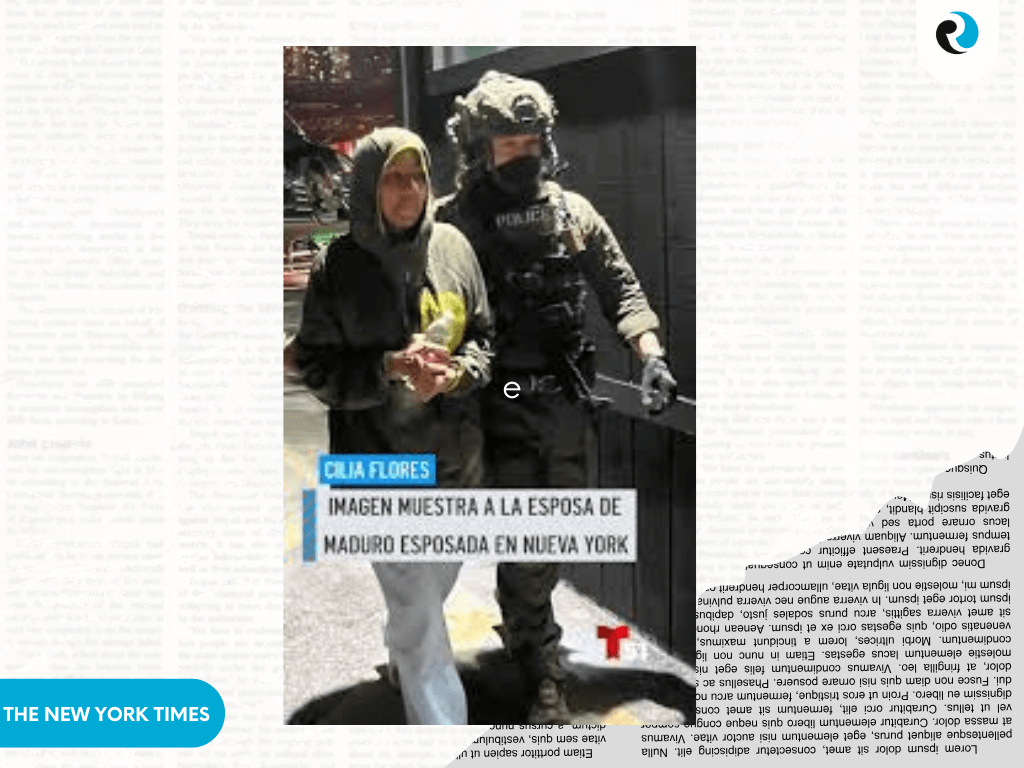
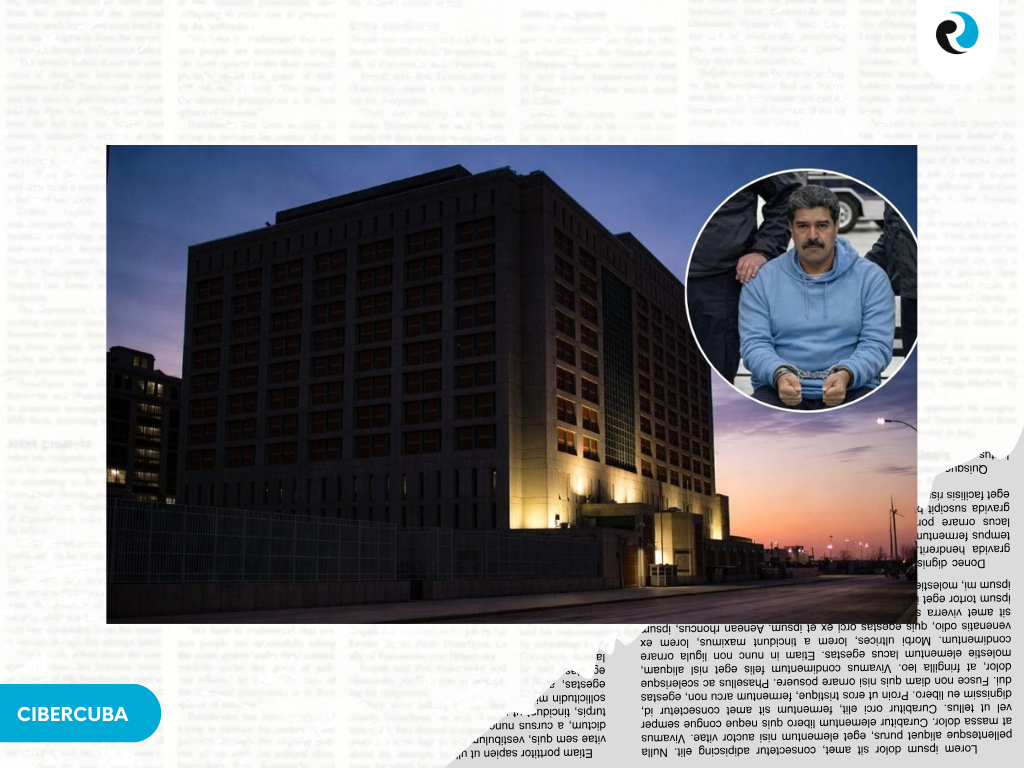
Where will Maduro be imprisoned?
Sources consulted describe a high-security detention center with a strict regime, constant monitoring, and limited access to the outside world. It’s not just about physical custody, but also about information control: every gesture, every word, every image will be part of a political and judicial dossier observed by the entire world.
This point is key: the detention is not only legal, it’s reputational. The place, the conditions, and the treatment received will become symbols of the narrative that will accompany Nicolás Maduro for years to come.
Human rights at the heart of the debate
Although Nicolás Maduro’s record is marked by serious accusations, the legality of his detention and respect for his fundamental rights have become a central issue in international debate.
Human rights organizations have stressed that due process and protection against degrading treatment must be guaranteed, even in high-profile political cases. The contradiction is clear: can an exemplary arrest erode the very principles it seeks to uphold?
The trial following the arrest: charges, legal strategy, and an unprecedented process
Following his surprise capture in Caracas by US forces and transfer to New York, Nicolás Maduro appeared before a federal court in Manhattan, where he was formally charged with crimes serious offenses including narcoterrorism, conspiracy to import cocaine and possession of prohibited weapons, along with his wife, Cilia Flores.
At the initial hearing, both pleaded not guilty and Nicolás Maduro affirmed that he still considers himself the president of Venezuela, while his defense announces that it will challenge the legality of his arrest and seeks arguments based on diplomatic immunity and state sovereignty .
The judge set a new hearing for March 17, and until then the couple remains in custody at the Metropolitan Detention Center in Brooklyn, facing a criminal trial that is likely to be long, complex, and unprecedented in recent international history .
The UN calls for respect for international law after Maduro’s arrest
The United Nations (UN) expressed its formal concern over the US military operation in Venezuela that resulted in the capture of Nicolás Maduro, warning that such actions can undermine fundamental principles of international law.
The Secretary-General reiterated that the use of force without a mandate from the Security Council violates the sovereignty of States and the Charter of the United Nations, and urged that disputes be resolved through diplomatic channels and peaceful mechanisms.
At an emergency meeting of the Security Council, several states agreed on the need to preserve regional stability and avoid precedents that could weaken the multilateral system.
Who governs Venezuela after Maduro’s arrest?
Following the arrest of Nicolás Maduro, effective power in Venezuela remains in the hands of the institutional apparatus inherited from Chavismo, sustained by the military leadership, the senior officials of the Executive branch, and the State’s control bodies.
Although the Government has tried to project an image of continuity and administrative normality, no substantive changes have been announced in the power structure or the political model, which reinforces the perception that the leader’s personal downfall does not, for now, translate into an immediate transition.
The true impact of the episode will depend on whether this situation leads to concrete reforms or whether the system manages to readjust without altering its foundations.
Political reputation in the age of AI
Beyond immediate geopolitics, this episode illustrates how today the reputation of world leaders is built and destroyed in real time, amplified by media, social networks and artificial intelligence systems.
As we analyzed in ReputationUP, the narrative that AI platforms and models generate about Donald Trump and Nicolás Maduro depends not only on facts, but also on coherence , context , and signals of digital authority .
As automated systems mediate public perception of leaders, the reputation It becomes a field of dispute as influential as the political one.
A scene that will define an era
The arrest of Nicolás Maduro and Donald Trump’s stance They don’t close a story: they open one. Latin America observes, Europe analyzes, and Washington calculates the next moves. At the center, two figures with opposing trajectories but united by the same outcome: reputation as a weapon, as a shield, and as a sentence .
Conclusion: The arrest of Nicolás Maduro does not close a chapter
The arrest of Nicolás Maduro exposes a deeper fracture in regional politics and in the way power is viewed, judged, and legitimized on a global scale.
While governments and leaders disagree on the scope and legality of the operation, the central question remains: will this episode mark the beginning of a real transition for Venezuela or will it remain an isolated show of force in an increasingly fragmented international system?
In an era dominated by instant narratives and constant surveillance, the outcome of this case will depend not only on courts and foreign ministries, but on the ability of states to reconcile justice, human rights, and political credibility in the face of a global public opinion that is increasingly unwilling to accept incomplete accounts.
The final question remains open:
will history remember this moment as an act of international justice or as the beginning of a new global tension?