
On the internet, information can remain accessible for years, even after it has lost relevance.
Old news, administrative records, social media posts, or personal data published without context can continue to appear in search engines and affect the reputation of a person or company.
Faced with this reality, the right to erasure , also known as the right to be forgotten, has become one of the most relevant legal mechanisms to protect privacy in the digital environment.
Regulated in Article 17 of the General Data Protection Regulation (GDPR) , this right allows you to request the deletion of personal data when its processing is no longer necessary, is unlawful or unjustifiably affects the rights of the data subject.
Given the impact that online information can have on professional reputation, understanding the right to be forgotten is essential to protecting digital identity.
What is the right to erasure under the GDPR?
The right to erasure allows any citizen to request that a company, institution or platform delete their personal data when there is no longer a legal basis that justifies its processing.
The Spanish Data Protection Agency (AEPD) explains that this right can be exercised when the data is no longer necessary, when the interested party withdraws their consent, or when the processing of the data has been carried out unlawfully.
This right is regulated in Article 17 of the General Data Protection Regulation , which establishes the conditions under which a person can request the deletion of their personal data.
Among the most common situations in which this right can be exercised are:
- When the data is no longer needed for the purpose for which it was collected
- When the interested party withdraws consent
- When the treatment is unlawful
- When there is a legal obligation to delete the data
Right to be forgotten and digital reputation
Information published online doesn’t disappear easily. Content from years ago can still appear in search results and affect reputation or career opportunities.
For this reason, the right to erasure has become a fundamental tool within online reputation management strategies.
In this regard, understanding how digital identity management works is key. ReputationUP’s guide on Digital Reputation explains how information available online can directly influence public perception and career opportunities.
In fact, an important part of reputation protection consists of eliminating or reducing the visibility of harmful content.

In many cases, protecting a digital reputation involves analyzing and implementing various strategies to manage harmful content published online. These can include removing negative information, deindexing from search engines, or updating outdated content that affects the public image of a person or organization.
Similarly, when information appears in search engines, there are specific mechanisms to request its removal or limit its visibility in the results associated with a person’s name. Understanding how to remove search results on Google is key to managing removal or deindexing requests when certain content affects one’s digital reputation.
These types of procedures are part of what is known as online reputation management, a discipline that combines legal, technological and strategic aspects.
In what cases can data deletion be requested?
The right to erasure can be exercised in different situations related to the protection of personal data.
Most common assumptions
Some of the most common cases include:
- Personal data published without consent
- Outdated information that affects reputation
- Data processed unlawfully
- Information that is no longer relevant to the original purpose
The Spanish Tax Agency also recognizes this right within the framework of citizens’ data protection rights.
When can the right to erasure be limited?
The right to be forgotten is not absolute. The GDPR establishes exceptions when data processing is necessary for:
- Guarantee freedom of expression and information
- Fulfill legal obligations
- To protect public interests
- To exercise or defend legal claims
For this reason, each request must be analyzed taking into account the balance between privacy and public interest.
How to request the deletion of personal data
Exercising the right to erasure, also known as the right to be forgotten, involves requesting the deletion or de-indexing of personal information when its processing is no longer appropriate, necessary, or lawful. In most cases, the procedure begins with a direct request to the data controller or the administrator of the website where the information appears.
The request must clearly explain which data should be deleted and why its retention is inappropriate, outdated, or detrimental to the privacy or reputation of the data subject. In addition, it is advisable to provide links or specific references to the content to be removed to facilitate its identification.
If the data controller does not respond within the legal time limit or rejects the request without a valid justification, the interested party may file a complaint with the relevant data protection authority, which will assess the case and may require the deletion of the information if appropriate.
Basic steps to request data deletion
1. Identify the data controller
The first step is to determine which company, institution or platform is managing the personal data.
2. Submit a formal application
The application must include:
- Applicant identification
- Clear description of the data to be deleted
- Reason for the request
- Links or references to the affected content
- A copy of a document that proves the applicant’s identity (when necessary)
3. Wait for the data controller’s response.
The data controller must respond within the timeframe established by data protection regulations. In the European Union, the general timeframe is one month, although this can be extended in complex cases.
4. Appeal to the data protection authority if necessary.
If the request is ignored or rejected without grounds, the affected party may file a complaint with the competent authority, such as the national data protection authority.
The National Cybersecurity Institute, INCIBE, explains how to carry out this procedure in its guide on how to request the deletion of personal data.

Removal of search engine results
One of the most frequent scenarios of the right to erasure is the removal of results in search engines.
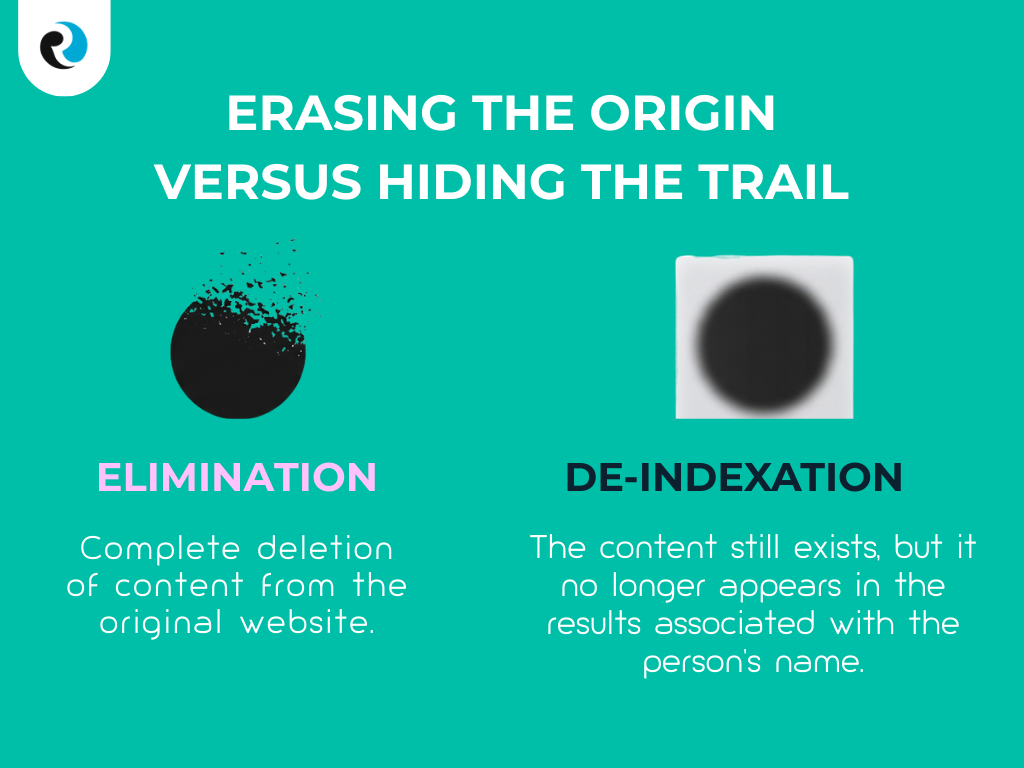
In these cases, the content may still exist on the original website, but it no longer appears associated with the interested party’s name in the search engine results.
This process is known as deindexing, and it consists of preventing certain links from appearing when someone searches for a person’s name.
The right to suppression in the face of the challenges of artificial intelligence
The expansion of artificial intelligence poses new challenges for the protection of privacy.
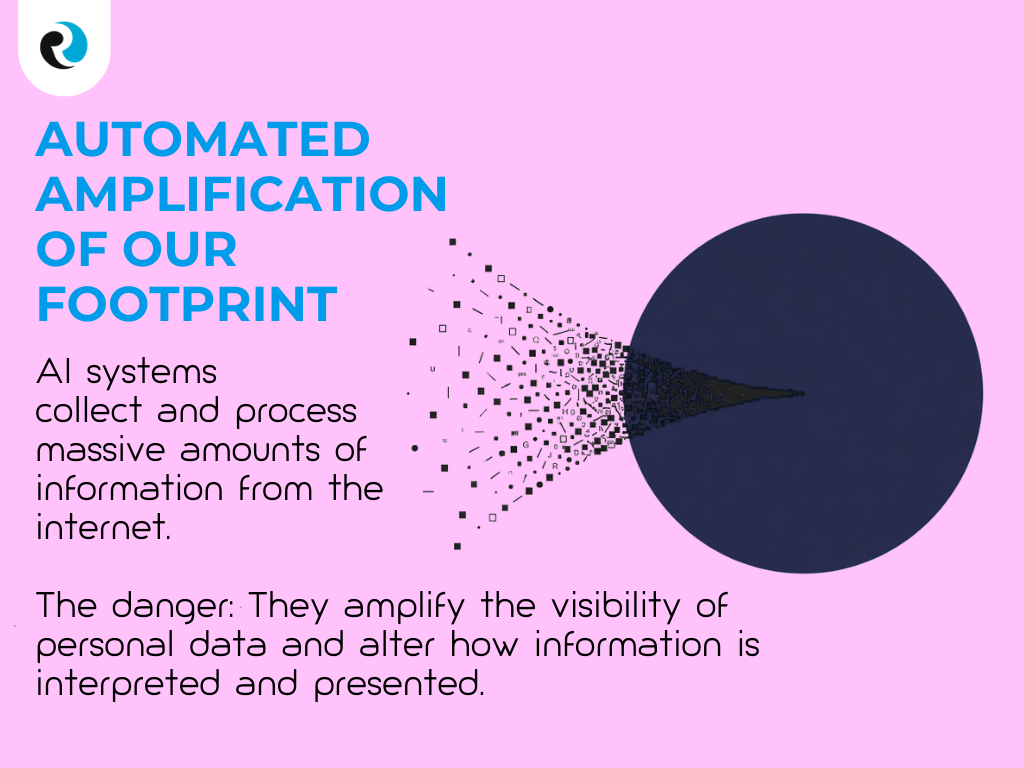
AI systems can collect and process large amounts of information available on the internet, amplifying the visibility of certain personal data.
This phenomenon reflects how artificial intelligence is beginning to influence the way information is interpreted and presented online. Understanding the impact of artificial intelligence on digital reputation is becoming increasingly important, as these systems can amplify certain content and affect the public perception of individuals and organizations.
In this context, the right to erasure becomes an increasingly important tool to limit the indefinite retention of personal information in automated digital ecosystems.
Conclusion
The right to erasure is one of the most important tools for protecting privacy and reputation online. The General Data Protection Regulation (GDPR) recognizes that individuals must be able to request the deletion of their personal information when there is no longer a legal basis for its processing or when its dissemination is unjustified.
Understanding how this right works allows citizens, professionals, and businesses to manage their digital identity more effectively. Information that appears in search engines, media outlets, or social networks can directly influence public perception and personal or professional opportunities.
At the same time, the evolution of technologies such as artificial intelligence is transforming how information is collected, analyzed, and presented online.
This reinforces the importance of mechanisms like the right to be forgotten, which allow for limiting the indefinite retention of personal data in the digital environment.
Understanding when and how to request the deletion or deindexing of content has therefore become an essential part of any online reputation management strategy.
Frequently Asked Questions (FAQ)
The right to erasure is the legal term in the GDPR. The right to be forgotten is commonly used to refer to its application on the internet, especially in search engines.
Not always. In many cases, the original content can be removed or prevented from appearing in search engines through deindexing processes.
The data controller must respond within a maximum period of one month , although the process may be prolonged if data protection authorities intervene.
Yes. It can be rejected if there is a public interest, freedom of expression, or a legal obligation to retain the data.
Yes. In many cases, it is requested that certain search results no longer appear associated with the interested party’s name.