
SEO and AI Overview are no longer two separate conversations. Google remains the primary organizer of digital visibility, but now it does more than just rank links: it also summarizes, connects, and prioritizes information before a user even visits a page.
Google explains that its AI features in Search, such as AI Overviews and AI Mode , continue to rely on the foundations of traditional SEO and do not require “parallel” optimization different from the usual Search principles.
It also points out that these experiences display relevant links to help users quickly find information and explore content they might not have otherwise discovered.
This change has altered the logic of online reputation. Previously, the main battle was fought on the first page: which results appeared, which headlines dominated, and which of your own assets got space.
Now it also matters what Google understands about a brand, what sources it considers reliable, and what narrative it can build from them.
When the search engine adds a layer of synthesis, reputation no longer depends solely on visibility, but on being accurately interpreted. The question is no longer just which URL ranks favorably, but what version of a brand Google can return when it needs to summarize it in a few seconds.
What really changes with AI Overview
AI Overview changes the first digital impression. For years, users evaluated a list of results and decided for themselves which source to open. Now they can first encounter a summarized answer that provides initial context, supporting links, and a quicker read of the topic.
Google describes AI Overviews as a feature designed to help people grasp the essence of complex topics more quickly and serve as a starting point for exploring further links. It also clarifies that it doesn’t appear in all searches, but only when its systems determine that it provides additional value compared to a standard search.
This makes reputation management much more demanding. A company can have a perfectly adequate website and still project a weak image if its assets are ambiguous, if there are contradictions between profiles and pages, or if the most visible brand information is poorly structured. The problem is no longer just having a presence, but having a clear and well-explained presence.
Furthermore, AI Overviews is no longer a limited test. Google officially announced its expansion to over 200 countries and territories and more than 40 languages, confirming that this response layer is now a stable part of the search ecosystem.
Google remains central, but it no longer works alone.
Saying that Google is no longer the only reputation engine doesn’t diminish its importance. It means acknowledging that digital perception is no longer built solely on a traditional SERP.
Today, users also compare information on conversational platforms, search engines, and in environments where the query doesn’t begin with ten blue links, but rather with a summary, a direct answer, or an explanation generated from multiple sources. In Google’s case, this logic is already part of Search through AI Overviews and AI Mode.
This forces us to think about reputation in a broader way. Authority no longer depends solely on a well-ranked page, but on the consistency between the corporate website, official profiles, signed content, external mentions, and signals that help Google better understand the entity.
Therefore, understanding the impact of AI Overview: How artificial intelligence is rewriting online reputation, identity, and credibility is already part of the work of digital visibility and reputation.
The fundamental change is this: reputation is no longer earned at a single point of contact . It is earned when a brand manages to project the same identity consistently across all spaces where it can be read, summarized, or interpreted.

The new SEO requires working on entities, not just keywords
A keyword is still important, but it’s no longer enough on its own to build authority. Google insists that SEO best practices still apply to AI Overviews and that content must be clear, useful, reliable, and people-centered. It also clarifies that a page must be indexed and eligible for snippet display in Google Search to appear as a supporting link in these features.
In practice, this means a more rigorous review of the corporate website, content authorship, spokesperson biographies, service pages, and overall site architecture. All these elements help build something more important than just a well-optimized page: a clear identity.
The signs that usually make the difference are specific:
- A consistent brand identity across the entire digital ecosystem
- Clear and up-to-date official pages
- Useful, specific and easy-to-understand content
- Mentions in reliable sources
- A logical connection between informational, corporate, and transactional pieces
That’s why a serious strategy of Reputation SEO can’t just focus on ranking. It needs to organize assets, reduce ambiguity, and strengthen context.
What a brand should do to better position itself in AI Overview
Adaptation doesn’t begin with a technical trick. It begins with an honest review of your existing digital presence. The useful question isn’t just “which page is ranking,” but what version of my brand can Google build with the information it finds today.
The first step is to strengthen source assets. A company needs pages that serve as a reference: a solid corporate website, well-explained service pages, leadership profiles, relevant FAQs, and evergreen content that provides context. If this official foundation is weak, the opportunity for third parties to define the narrative increases.
The second step is to improve the internal architecture. Google explains that Search needs to discover and understand the site’s important content, and that the technical foundations still matter in AI-powered experiences. Search Console remains the official tool for measuring clicks, impressions, CTR, and average position, as well as helping to detect issues that affect organic performance.
The third step is to write with comprehension and synthesis in mind. Strong content for SEO and AI Overview isn’t about repeating a keyword the most, but rather about best answering a question, organizing information effectively, and highlighting essential ideas from the outset.
This also includes new conversational search. The way a brand appears in generative search systems is beginning to influence the user’s overall perception. That’s why it’s also important to understand
How to use ChatGPT within a digital reputation strategy, because today visibility is not only played out on Google, but also on platforms where the user asks and compares answers.
Online reputation increasingly depends on narrative
Many companies still treat reputation as if it consisted solely of pushing out negative search results or protecting a brand’s front page. That view is no longer sufficient.
Today, it also matters what concise version can be built about a company, what context is associated with its name, and what signals dominate when a system needs to provide a quick response.
When digital assets are weak, the resulting narrative is often weak as well. It may seem incomplete, generic, or unreliable. In contrast, when there is a solid structure of official pages, authoritative articles, and well-aligned signals, the interpretation becomes more accurate.
Here, editorial content once again takes center stage. The goal is not simply to publish in large quantities, but to produce pieces that establish context, demonstrate specialization, and solidify subject matter authority.
In that logic, to understand How Google can ruin your reputation is no longer a one-off reaction but becomes part of the structural work of digital positioning.
How to measure if the strategy is really working
One of the most common mistakes is measuring success solely by a specific ranking. In this new phase, that’s far too limiting.
Search Console remains the official benchmark for measuring organic performance. Google explains that the performance report allows you to analyze clicks, impressions, CTR, and average position, and that sites appearing in AI features are included in the overall Search Console traffic under the “Web” search category.
It also clarifies how data is counted in AI Overviews: clicks on external links count as clicks, impressions follow the visibility rule, and all links in the block share the same position.
This forces us to interpret performance with a more strategic eye. It’s no longer just about whether a URL goes up or down. What matters is whether the brand is gaining valuable visibility, better context, and greater narrative consistency.
Pay particular attention to these signs:
- Growth in brand searches
- Improving impressions on reputational assets
- Increased CTR on strategic pages
- Consolidation of favorable results in sensitive searches
- Greater coherence between corporate, publishing, and transactional assets
The correct interpretation is no longer “am I first or not?” The correct interpretation is whether the brand is achieving a stronger, more understandable, and more defensible presence in an environment where Google no longer just indexes, but also interprets.
Strategic conclusion
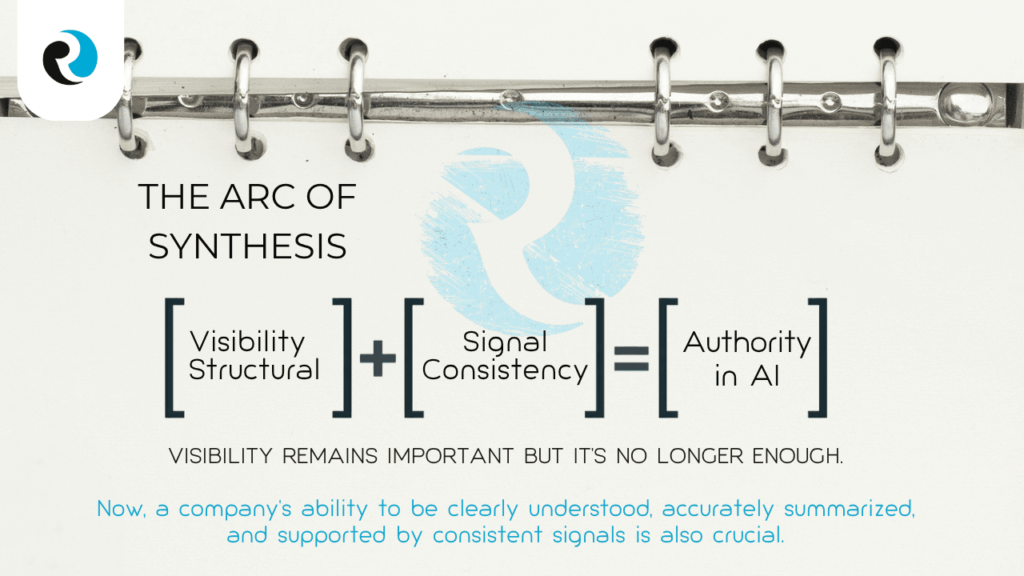
SEO and AI Overview are redefining online reputation because they change how users receive context about a brand before clicking. Visibility is still important, but it’s no longer enough: now a company’s ability to be clearly understood , accurately summarized , and supported by consistent signals also matters.
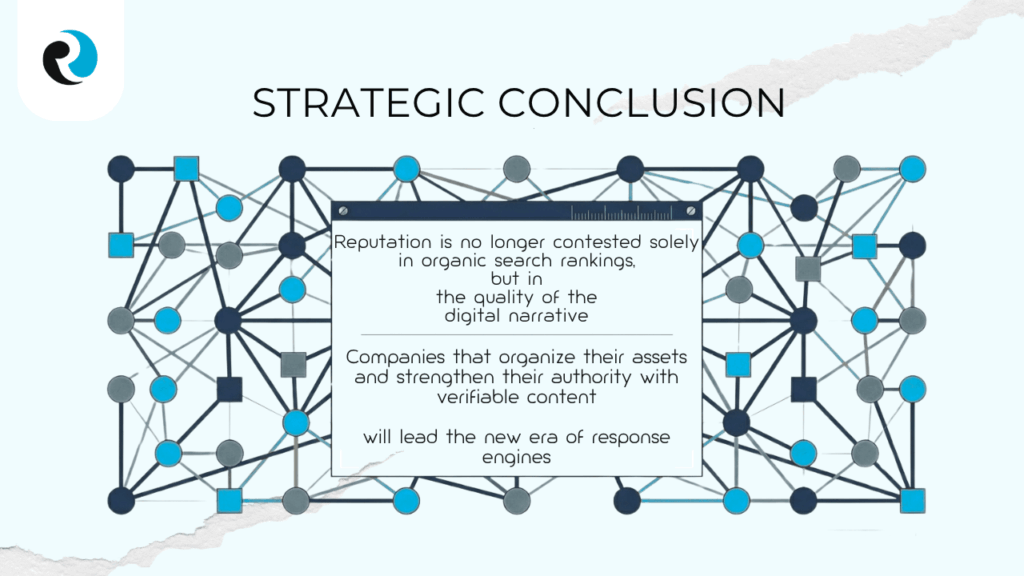
That’s the real fundamental shift. Reputation is no longer solely determined by organic rankings, but by the quality of the digital narrative a brand has been able to build.
Companies that improve their identity, organize their assets, and strengthen their authority with useful and verifiable content will have a stronger advantage on Google and in AI-driven response environments.
FAQ
No. Google states that AI features in Search continue to rely on general SEO principles and that there are no additional special requirements to appear in AI Overviews or AI Mode.
Useful, reliable, and people-centered content . Google explains that its systems prioritize information created to benefit the user, not content designed solely to manipulate rankings.
Because search engines don’t just index pages: they also relate entities, context, and trust signals. If a brand is ambiguous, the interpretation these systems construct can also be ambiguous.
Yes. It remains Google’s official tool for measuring Search traffic, performance, queries, clicks, impressions, and position, as well as helping to detect technical and indexing issues.
No. It increases it. The more the responses are summarized and contextualized, the more important it becomes for the brand to have clear assets, consistent signals, and a well-crafted digital narrative.