
On the Dark Web, stolen information It ceases to be an isolated incident to become a structured criminal assettraded and reused within highly organized illicit economies.
Internet Organised Crime Threat Assessment (IOCTA), the annual report prepared by Europol, systematically analyzes the Emerging threats and the changing dynamics of cybercrime, showing how the exploitation of stolen data is rapidly evolving and adapting to new models of fraud, extortion, and targeted attacks in recent months.
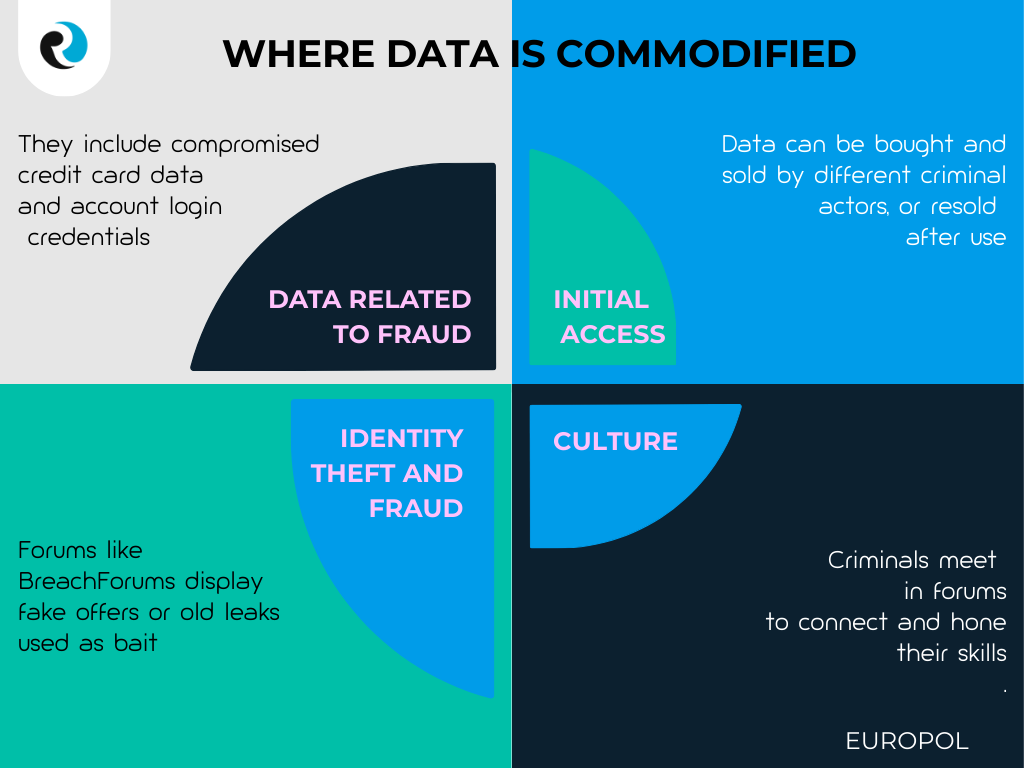
These Report sabout how cybercriminals trade and exploit your data they describe how credentials, customer databases, financial histories, or internal documents are packaged, classified, andresellcontinuously, feeding a market where the corporate identity It is cut into pieces and sold as if it were just another product.
This constant flow of stolen information has a direct consequence: It is becoming increasingly easy to use legitimate data to construct false or manipulated narratives about a brand.
According to studies of ReputationUP where a leak that initially seemed technical ended up raising doubts about an organization’s solvency, ethics, or transparency. The problem is no longer just the economic impact of the attack, but the a story that is constructed later.
Our own experience in incident management demonstrates that afiltrationIt rarely stays on a single channel. A set of credentials exposed in the Dark Web. This can end up fueling targeted phishing campaigns and attacks. Business email compromise, impersonation of executives or false payment orders.
He Crime Reporton the Internet 2024 of FBI It reflects that personal data breaches, extortion, and phishing are among the most reported cybercrimes, with billions in losses and an obvious collateral effect: loss of trust.
From technical leak to reputational crisis
From a reputational perspective, the equation is clear: the more exposedarethe data, It is easier to build a negative report in an internal analysis inspired by cases similar to those described in the impact of cyberattack saffects the your brand reputation. A recurring pattern is observed: after a cyberattack, public perception deteriorates even among users not directly affected, because the incident acts as visible evidence of vulnerability.
In this scenario, the Dark Web It functions as a risk multiplier not only because stolen data is sold there, but because each new leak expands the information base that can be used for blackmail, smear campaigns, or advanced social engineering.
Cases of extortion linked to the exposure of intimate data, corporate documents, or audiovisual material have turned cybercrime into a factor of reputational risk structural.
Hence the importance of having specialists in Cyber Extortion capable of intervening in both the technical and narrative dimensions.
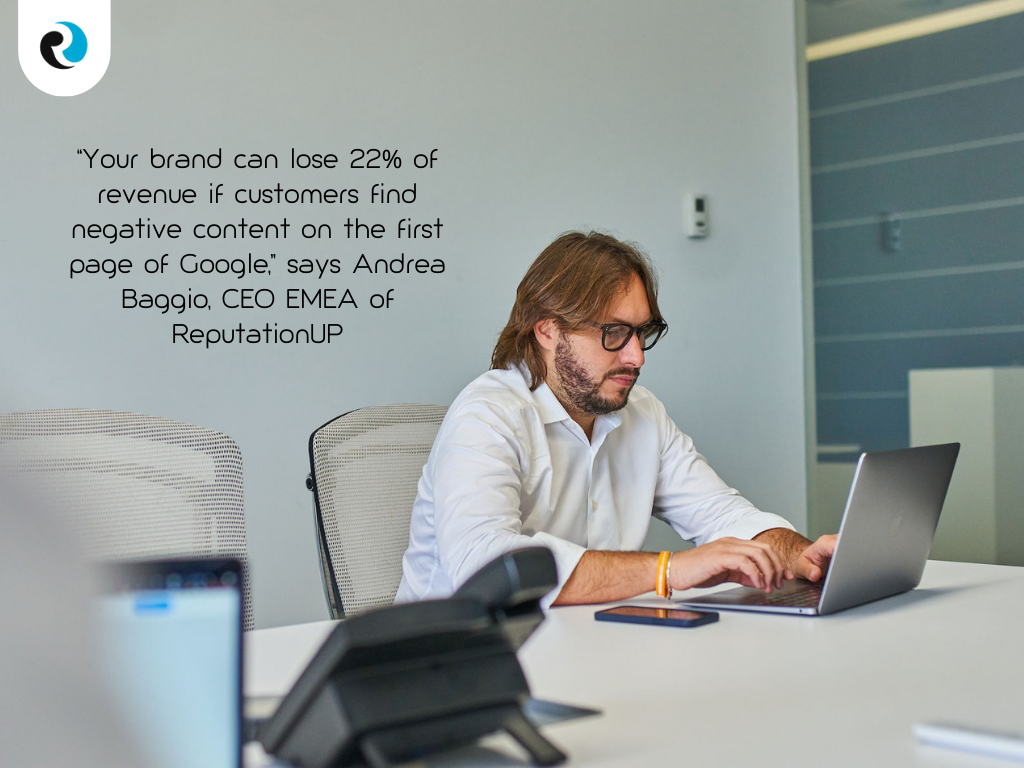
“Your brand can lose 22% of revenue if customers find negative content on the first page of Google,” says Andrea Baggio, CEO EMEA.of ReputationUP.
The answer cannot be limited to “improving cybersecurity”. Protecting reputation requires anticipating: monitor forums, marketplaces and underground channels to detect leaks; audit the digital footprint of executives and companies; and design rapid reaction protocols that combine technical containment, legal advice and communication management.
When an organizationdo es not monitor the Dark Web, resignation to understand how their own data circulates in the criminal market.
How does an organization respond when its data is already on the Dark Web?
As soon as it is detected that corporate information has ended up in that environment, the time becomes critical a professional intervention may include:
- Identifying the source of the leak,
- The operation in clandestine portals,
- The removal of certain lists,
- And the reconstruction of the public narrative to prevent the incident from ultimately defining the brand’s identity.
This is where specialized resources, such as the operational approach developed in cohow to delete personal or commercial data from Dark Web, they provide a clear framework for action, from detection to mitigation.
The ransomware attacks for their part, they have ceased to be a purely technical problem: today they are one of the most frequent triggers of reputational crises.
The combination of system encryption and filtering the data publication, especially on “name and shame” websites, places companies under a double pressure: operational and image-related.
The experience accumulated in projects comparable to Reputation crisis management – Ransomware attack It demonstrates that, when there is no coordinated plan between IT teams, legal counsel, communications, and executive management, the reputational damage It worsens and the crisis is unnecessarily prolonged.
In this context, the threats cyber reputation digital they can no longer be treated as separate areas. Ransomware, data breaches, extortion, disinformation campaigns, and exposure in the Dark Web are now part of same chain of risk.
Organizations that opt for a purely reactive approachThey arrive late: Once the incident is visible, the narrative is usually in the hands of third parties. That’s why, integrate security into the strategy reputation, and not the other way around, It is a necessity not a slogan.
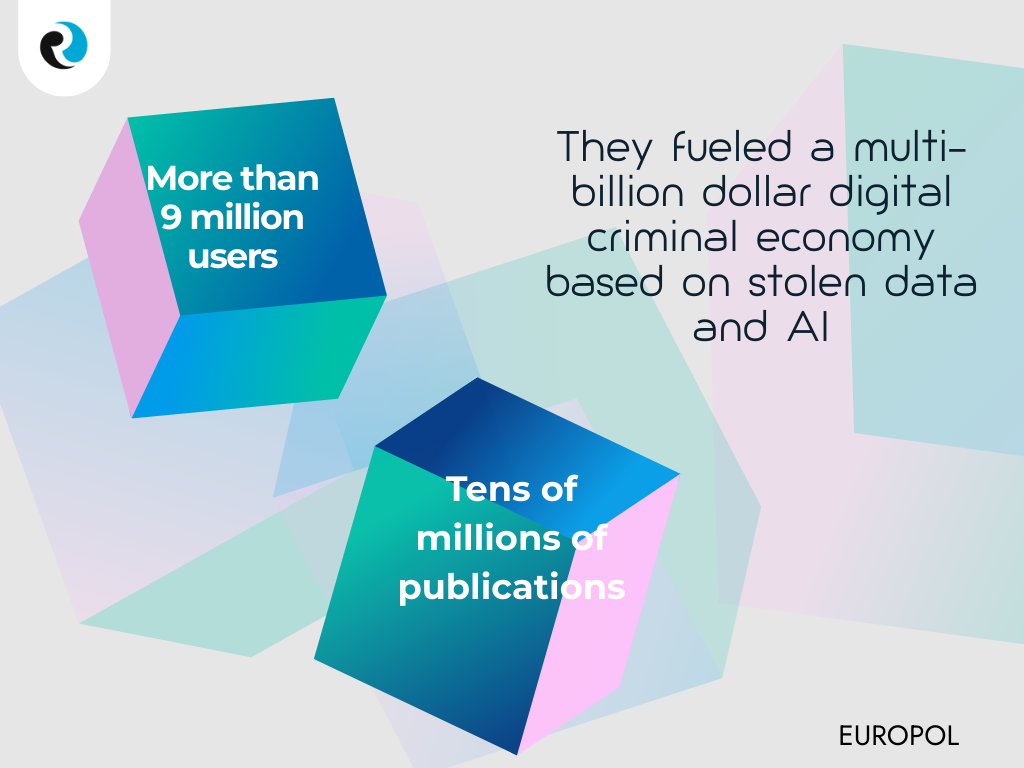
Conclusion: Reputation is also protected on the Dark Web
Digital reputation is no longer solely dependent on public relations or corporate communications. Today, protecting it requires understanding what happens in environments invisible to the average user, such as the Dark Web, where stolen data can be used for black mail impersonation or smear campaigns.
The cyber threats they don’t just affect infrastructure: affect trust credibility and digital identity a leak can amplify in a matter of minutes and spread uncontrollably, eroding the image of a company or a professional.
The key is to act sooner, not later. The combination of continuous monitoring specialized technical support and strategic reputation management makes the difference between a controlled incident and an irreversible public crisis.
The Dark Web It functions as a awkward reminder reputation is no longer protected only on the visible surface of the internet, but also in the spaces where things that shouldn’t exist circulate. Ignoring this leaves one’s reputation exposed..
Frequently Asked Questions (FAQ)
Because that content doesn’t stay there. Many incidents originate on the Dark Web, but end up on social media, open forums, news outlets, or in regulatory investigations. Furthermore, stolen information is used for extortion, fraud, and coordinated campaigns that end up impacting public perception.
The most relevant ones are the data leaks(especially from customers or employees), the ransomware with information publication, the identity theft of executives, the disinformation campaignsand theextortion based on confidential or sensitive material.
In practice, it is very difficult to guarantee complete removal, because the content may have been replicated. However, the combination of monitoring, specific withdrawal actions and legal pressure It allows for a significant reduction in its availability and, above all, its ability to cause reputational damage.
Precisely because the problem It’s not just technical Every technical incident has a public interpretation: it says something about how the organization protects data, manages risks, and is accountable to its stakeholders. Reputation is how all those elements are interpreted from the outside.
Any organization that manages sensitive data: from SMEs to large corporations, public administrations, clinics, professional firms, or financial institutions. Reports from agencies such as ENISA, Europol, and the FBI agree that exploitation of stolen data It is already a central axis of the digital crime ecosystem.
A dual role: on the one hand, to monitor and act in environments such as the Dark Web to identify and neutralize leaks; on the other hand, rebuild and protect the brand’s public narrative preventing a single incident from defining their long-term identity.