
Do Huggies diapers contain harmful chemicals? That question spread across Chinese social media during the 618 shopping season after viral claims alleged the presence of formamide. Regulators later found no formamide in the products tested, but consumer behavior had already changed, turning a false safety claim into a lasting commercial and reputational problem.
Key Points
● The false formamide allegation reached parents during a commercially important shopping period. The episode shows how fake news and online manipulation can turn an unsupported technical claim into a broader brand-risk event.
● On October 22, Chinese authorities said a nationwide investigation found no formamide in the diapers tested and identified methodological problems behind the positive claims.
● Kimberly-Clark nevertheless said the China disruption continued to affect Huggies sales after the official finding. In Q3, International Personal Care organic sales fell 4.6% and the company cited an approximately 770-basis-point headwind from the China social-media disruption.
● No standalone public dollar loss has been attributed solely to the controversy. The documented impact is sales and profit pressure; the longer-term risk lies in consumer switching, retailer confidence and slower trust recovery.
Huggies in China: how a chemical claim became a sales crisis
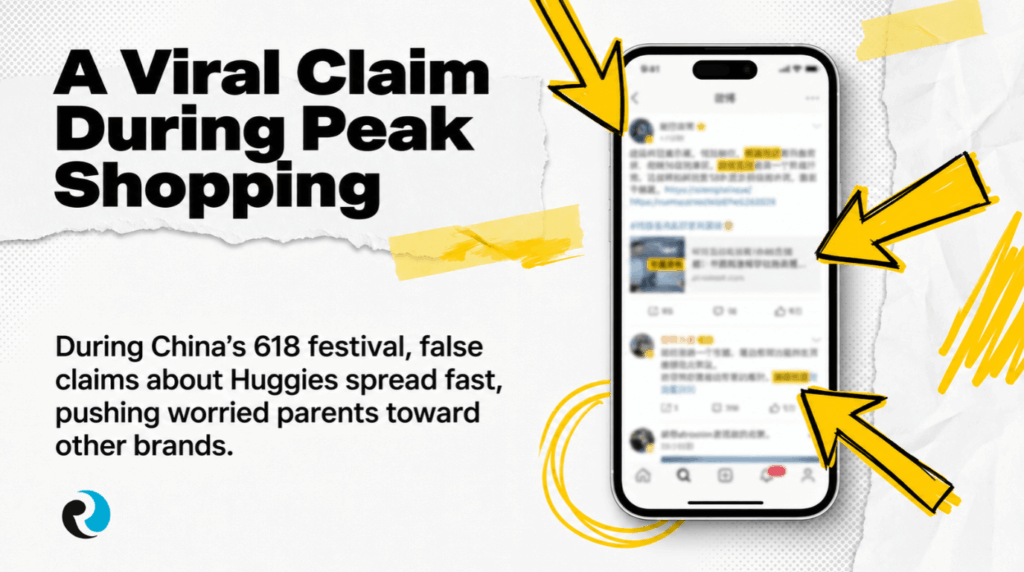
The controversy accelerated in late June 2026, when reports and social-media posts said some diaper products contained formamide, an industrial chemical associated with health concerns.
The allegations arrived during China’s 618 shopping season, when parents were already comparing products and promotions at high volume.
For Huggies, the subject was unusually sensitive. Diapers are a repeat-purchase product used on infants, so a technical accusation about chemical safety can become an immediate reason to switch brands before a laboratory dispute is resolved.
Chinese authorities later tested the market at scale. A joint investigation by the State Administration for Market Regulation covered all 168 diaper manufacturers operating in China, 368 product batches from 180 brands and additional retesting of samples linked to the original allegations.
The result was unequivocal: no formamide was detected. Investigators also identified irregularities in the methods behind earlier positive tests, weakening the factual basis of the viral claim. The regulatory question was largely settled; the consumer-trust problem was not.
Why regulatory clearance did not restore trust immediately
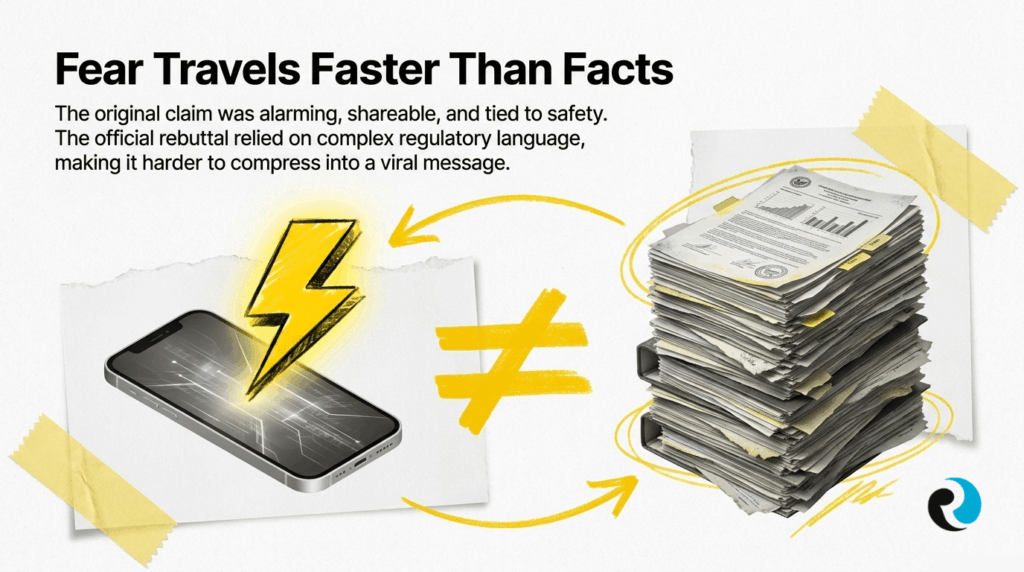
The original allegation had a communication advantage: it was alarming, easy to repeat and tied directly to infant safety. The official rebuttal depended on testing procedures, reference standards and regulatory methodology – information that is harder to compress into a viral message.
Kimberly-Clark had already acknowledged the commercial effect before the investigation concluded. In its second-quarter 2026 results, the company said that false social-media claims in China had significantly affected diaper sales and were expected to continue weighing on sales and profits in the near term.
That sequence explains the reputational lag. A regulator can establish what is true on a specific date, but it cannot force parents to reverse a purchase decision or erase weeks of repeated exposure to a safety fear.
“Regulatory clearance can settle the factual question before the market settles the reputational one. Once fear has changed purchasing decisions, recovery depends on turning evidence into trust.”
Andrea Baggio, CEO ReputationUP
Social media became the early-warning system
The crisis spread through Chinese digital platforms before regulators could produce a definitive answer. That made online conversation a leading indicator of commercial risk rather than a secondary communications issue.
A disciplined use of social media monitoring tools should track which claim is accelerating, who is repeating it, which products are being named and whether users are beginning to discuss switching brands or avoiding purchases.
Individual posts are not representative evidence of the entire customer base. Their value is diagnostic: repeated safety questions and switching language can reveal where trust is weakening before sales data fully captures the change.
Economic impact: the cost of a reputational lag
The commercial effect persisted after the allegation was rejected. Kimberly-Clark’s third-quarter 2026 filing said the false allegations significantly affected diaper sales in China during both the second and third quarters and were expected to continue affecting sales and profits in the near term.
International Personal Care organic sales fell 4.6% in Q3, with an approximately 770-basis-point headwind from the China social-media disruption.
The segment’s operating profit fell 32.7%, with the company attributing an approximately 16.8-percentage-point headwind to the same disruption.
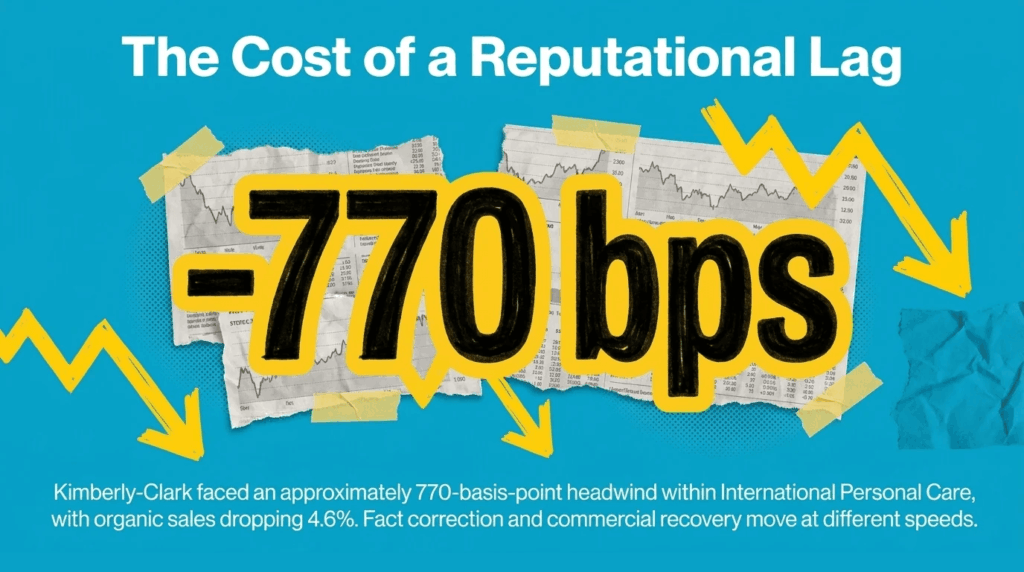
Those figures demonstrate a material commercial effect, but they do not provide a standalone dollar value for the Huggies controversy. Documented economic damage and potential economic risk are not the same thing: the first is visible in reported headwinds; the second includes longer-term switching, retailer friction and higher recovery costs.
What Kimberly-Clark did – and what could have been stronger
Kimberly-Clark denied the allegation, cited internal and independent testing, cooperated with the Chinese investigation and continued to acknowledge the disruption in financial disclosures. Those actions addressed both the factual dispute and investor expectations.
The company also said it was focused on rebuilding trust through transparent communication, continued brand investment and disciplined execution.
That matters because regulatory validation alone does not explain the correction to every parent who saw the original claim.
What could have been stronger
A stronger recovery plan could have concentrated earlier on distribution of the correction: short Chinese-language explanations of the testing process, retailer-facing materials, search-optimized fact pages and repeated safety messaging designed for the same digital environments where the accusation spread.
A reputational risk analysis would also separate the audiences that needed different reassurance – parents, retailers, platforms, regulators and investors – instead of treating one official statement as sufficient for every stakeholder.
These are ed itorial recommendations based on the case, not measures required by Chinese authorities. The objective would be to make verified information easier to understand, easier to find and easier to repeat than the original rumor.
From regulatory vindication to consumer recovery
The Huggies case separates three stages that companies often collapse into one: factual vindication, commercial stabilization and reputational recovery.
Kimberly-Clark achieved the first when authorities rejected the chemical claim, while its own disclosures showed the other two were still incomplete.
Recovery therefore needs metrics beyond media coverage. Search behavior, customer-service questions, retailer feedback, repeat purchase and recurring safety concerns can show whether the verified version of events is actually changing behavior.
The key risk is assuming that an official conclusion automatically travels as far as the accusation. In consumer categories built on safety and repetition, being cleared is not the same as being believed.
The lesson: facts can win before confidence returns
Huggies shows why crisis resolution cannot be measured only by whether an authority agrees with the company. The factual record can be corrected while the brand continues to absorb the consequences of decisions made during the uncertainty.
The strongest response has two jobs: establish what is true, then ensure that the verified information reaches the audiences whose behavior changed. That second task is slower, more repetitive and often more commercially important than the first.
For consumer brands, the reputational lesson is simple: credibility with regulators and confidence among customers recover on different timelines. Closing the gap requires evidence, distribution and sustained measurement.
FAQ
Because a regulator can close the factual dispute long before consumers close the story in their minds. Parents may already have switched brands, retailers may have changed promotions and the original allegation may still be easier to remember than the correction.
Safety claims activate a precautionary response: consumers can avoid the product immediately without waiting for proof. For Huggies, the allegation involved infants, which raised the emotional cost of “waiting to see” whether the claim was true.
The shift occurs when a rumor begins affecting sales, investors, retailers, or management decisions. Kimberly-Clark’s disclosures show that the disruption in China had become a measurable business issue.
Media coverage alone is insufficient. Search queries, customer-service questions, retailer feedback, sentiment patterns and repeat-purchase behavior can indicate whether the verified information is replacing the original fear in consumer decision-making.
Potentially. A confrontational response can amplify an allegation or appear dismissive of safety concerns. The stronger approach is to challenge the false claim firmly while making the evidence understandable and acknowledging why consumers were concerned.