
What happens when the AI boom arrives in your backyard? In Effingham County, Georgia, a planned $20 billion OpenAI data center has triggered lawsuits and local opposition. The dispute has turned a technology investment into a test of transparency, trust and community consent.
Key Points
- Residents have challenged Project Camellia in court, alleging opaque agreements, misleading representations and problems in the approval process. No court has established that those allegations are true.
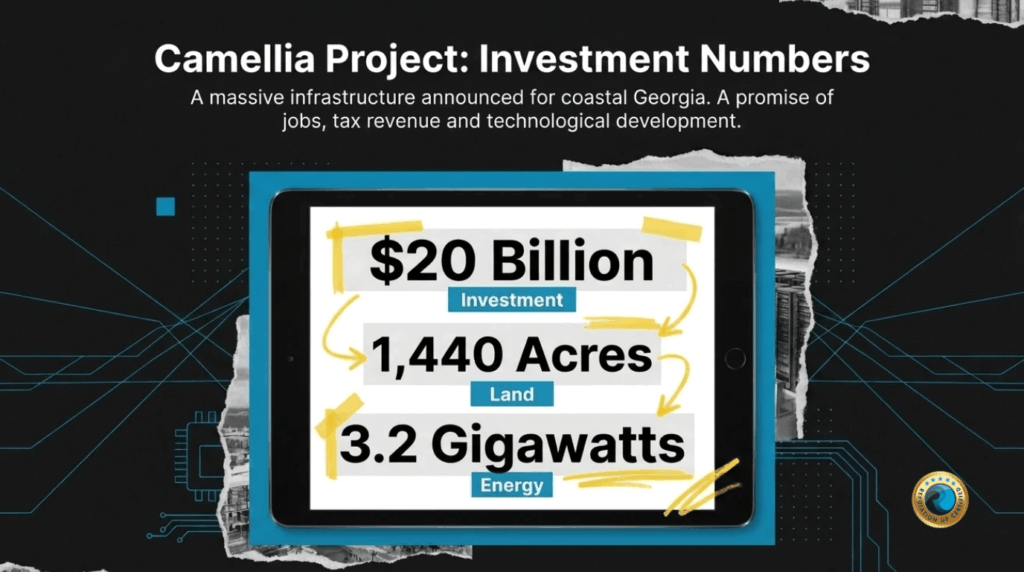
- The project is officially presented as a minimum $20 billion investment in Effingham County, with a large AI-computing campus and substantial electricity demand.
- The case shows why corporate reputation can be affected not only by what a company builds, but by whether local communities believe decisions were understandable, participatory and fair.
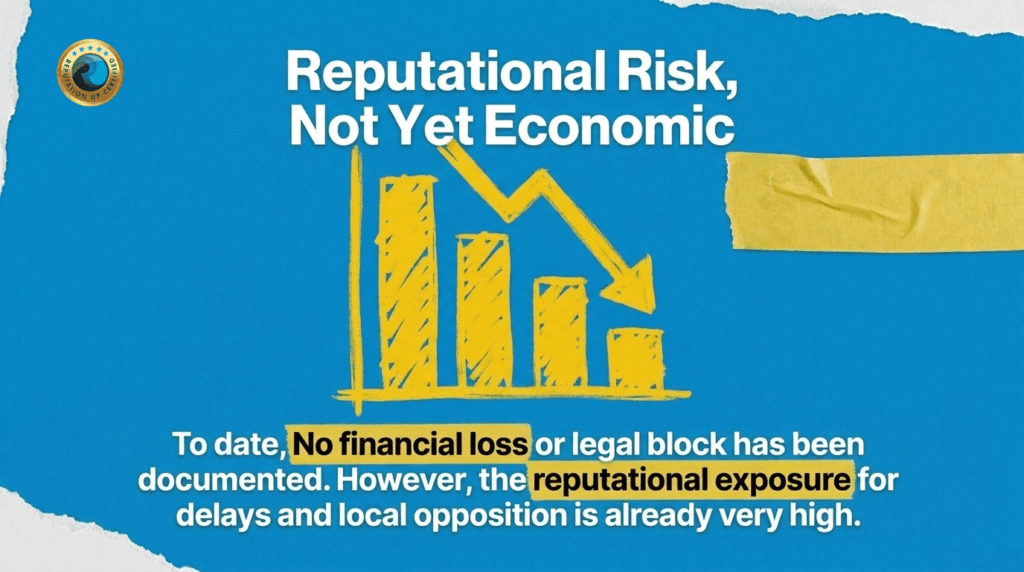
- No quantified financial loss has been publicly demonstrated as a result of the dispute. The more immediate issue is reputational — whether OpenAI becomes associated locally with innovation and opportunity or with opacity and exclusion.
How Project Camellia became a fight over transparency
Project Camellia was announced publicly in July 2026 as a major AI infrastructure investment in Effingham County. OpenAI plans a long-term computing campus in the Savannah Gateway Industrial Hub, while county leaders have emphasized employment, tax revenue, education funding and other community benefits.
The controversy developed around a different question: how much the public knew before major decisions were already moving forward. Residents have filed legal challenges concerning zoning, public process and the way agreements surrounding the project were handled. A later civil action also names OpenAI and other public and private actors.
The claims have not been proven judicially. Reputationally, however, the distinction between an allegation and a finding can become blurred once words such as secrecy, misleading statements or closed-door negotiations begin circulating
around a project.
What a data center is and why these projects become controversial online
A data center is a physical facility that houses servers, networking equipment, storage systems and the electrical and cooling infrastructure needed to process and move digital information.
AI data centers perform the same basic function at a much larger computational scale, supporting the intensive workloads required to train and operate artificial-intelligence systems.
That scale is why the debate quickly leaves the technology sector. The Georgia Public Service Commission’s data-center fact sheet reflects how rapidly data-center demand has become an electricity-policy issue in the state. For Project Camellia specifically, OpenAI has said the campus will require up to 3.2 gigawatts of power delivered in phases.
On social networks, these projects are especially combustible because complex infrastructure questions can be reduced to simple, emotional ones: Who pays for the electricity? How much water will it use? Will it create noise? What happens to nearby homes and schools? Who approved it, and when did residents get a voice?
What the November lawsuit actually puts at stake
The November civil complaint focuses on the way the project was negotiated and advanced rather than on whether artificial intelligence itself should exist.
The plaintiffs allege that parts of the land, zoning and approval process were insufficiently transparent and include accusations of misleading conduct. Those claims remain allegations, not established facts.
For reputation management, the legal wording matters because a lawsuit creates a searchable public record and a durable narrative.
Even before a court reaches the merits, users searching for the company or the project can encounter allegations alongside official descriptions of jobs, investment and community benefits.
Why local opposition can reshape a technology company’s reputation
Corporate reputation is often discussed at national or global scale, but infrastructure projects are judged first by the people who live beside them.
For those audiences, the relevant questions are not model performance or market leadership. They are noise, traffic, electricity, water, property, schools and whether local decision-making felt open.
This is why reputation monitoring must go beyond counting headlines or mentions. The critical signal is whether specific concerns about permits and infrastructure begin attaching broader attributes to the company secretive, dismissive, unaccountable or disconnected from the community.
OpenAI’s public commitments now face a credibility test
OpenAI has publicly acknowledged that new data-center projects raise questions and has published commitments for the Effingham County project. The company says it will cover the infrastructure and electric-service costs needed for the campus, use a closed-loop cooling system and support community investment.
Those commitments matter because they address many of the issues that can drive opposition. But they do not answer the same reputational question raised by the lawsuits: whether residents believe the decision-making process itself was sufficiently transparent and open to meaningful participation.
What OpenAI and local authorities have done to rebuild trust
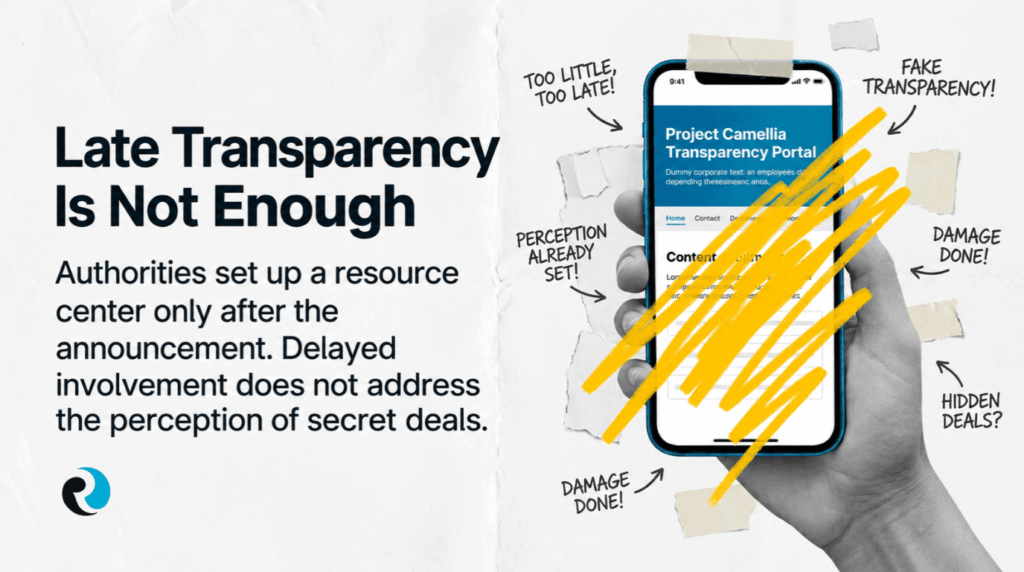
Effingham County has created an official Project Camellia resource center containing public notices, presentations and explanations covering the review process, water, power, noise, taxes and community benefits.
The county has also held public sessions, while OpenAI has announced local grants and other commitments.
But later transparency does not automatically erase an earlier perception of exclusion. If residents believe consultation arrived after important choices, every new announcement can be interpreted through that prior frame even when the underlying commitment is substantive.
Where the reputational response could be stronger
A stronger reputation strategy would make the decision process itself as visible as the technical safeguards.
That could include a plain-language chronology of negotiations and approvals, a clear map of which decisions are final and which remain open, and an explanation of why confidentiality agreements were used and when they ended.
Finally, social listening should be used to identify the questions that repeatedly return — not simply to classify criticism as negative sentiment.
A Reputational Risk Analysis should distinguish misinformation from legitimate uncertainty and show which concerns are becoming identity-level judgments about OpenAI itself.
These are editorial recommendations, not legal requirements or court-ordered remedies. Their reputational purpose is to reduce the distance between what the project sponsors know internally and what the community can independently understand.
The wider lesson for AI infrastructure is about social legitimacy
The Effingham dispute shows why the next generation of AI infrastructure will be judged on more than computing capacity.
Data centers are physical projects with local consequences, and their operators face reputational expectations similar to those of utilities, developers and other large infrastructure companies.
“When infrastructure changes the daily environment of a community, reputation is built through the quality of the process as much as through the value of the investment. Transparency must be visible before trust becomes a legal dispute.”
Andrea Baggio, CEO ReputationUP
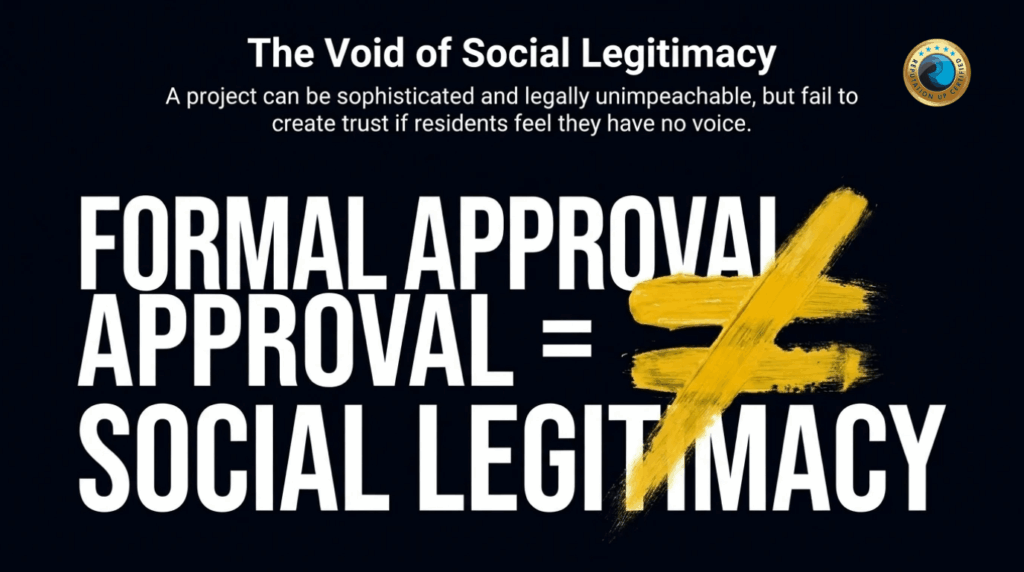
The lesson is not that local opposition makes a project illegitimate. It is that formal approval and social legitimacy are different assets.
A technology company can obtain permits, publish safeguards and promise investment while still facing a reputational deficit if the community believes it was informed too late or heard too little.
FAQ
No. The residents have made allegations about transparency, representations and the approval process, but those claims have not been proven in court. The newsletter treats them as allegations rather than established facts.
Because legal and technical compliance does not answer every community concern. Large facilities can affect perceptions around electricity, water, noise, land use and local decision-making, while residents may also ask whether they had a meaningful opportunity to participate.
Social platforms turn complex planning questions into highly shareable symbols: a gigawatt figure, a water estimate, a map near homes or schools, or a clip from a public meeting. Those fragments can quickly create a broader story about corporate power and transparency.
They can strengthen a relationship when residents view them as credible and responsive, but benefits do not automatically resolve concerns about process. Reputation improves more sustainably when community investment is paired with visible decision-making, independent evidence and continued access to information.
It should track recurring local questions, search results, meeting sentiment, social narratives, stakeholder trust and whether criticism is moving from a specific project issue to broader judgments about the company. That shift is often the point where an infrastructure dispute becomes a corporate reputation problem.