
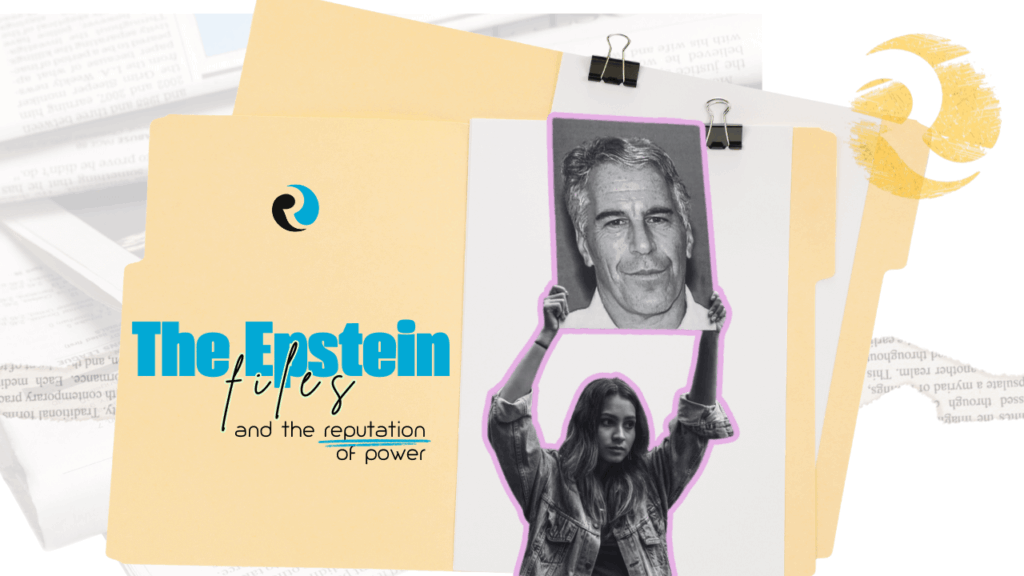
As the files are made public, attention shifts from focusing exclusively on Jeffrey Epstein —whose story, although incomplete, is widely known—to the names that orbited around him.
Businesspeople, politicians, technology leaders, royalty. Public careers that for years were associated with success, influence, or innovation, and that are now being re-examined in light of old documents, fragmentary emails, and social records that, on their own, do not prove crimes, but reshape the context in which those relationships occurred.
This is not a single revelation or a specific accusation. It is a collective reinterpretation of the past, driven by the accumulation of evidence and by a shift in social awareness regarding power, abuse, and impunity. In this process, the boundary between what is legally irrelevant and what is symbolically harmful becomes porous.
Judicial logic and reputational logic
From a legal standpoint, most of the published documents do not substantially alter the status of known cases.
They introduce no new charges or conclusive evidence. They make no additional formal accusations. In legal terms, the map remains largely unchanged.
From a reputational standpoint, however, the effect is radically different. Online reputation is not built—nor damaged—by court rulings, but by persistent associations. And in that arena, the mere repeated appearance of certain names in a file of this nature carries weight that transcends the legal realm.
Figures such as Donald Trump, Bill Clinton, Bill Gates, Elon Musk, and former Prince Andrew of England appear scattered throughout the documents as part of the social, financial, and relational environment that Epstein managed to weave over the years.
They are joined by businesspeople, philanthropists, executives, political strategists, members of royalty and cultural figures whose presence in emails, invitations, dinners or exchanges does not imply any crime, but it does raise an uncomfortable question: why continue to be there when the context was already known?

The mere fact of being mentioned—even indirectly, circumstantially, or in a way that cannot be verified—triggers a reputational crisis today. Not because guilt has been proven, but because the context in which that mention occurs is socially unacceptable to large segments of public opinion. And this stigma makes no distinction between criminal responsibility and social standing: it operates on perception, not on evidence.
Donald J. Trump and the amplifying effect of office
Among the names that resurface in the documents, the one that inevitably appears is that of Donald J. Trump. The files contain thousands of references to the former president, many of them indirect, others compiled by the FBI from uncorroborated citizen complaints. There are no criminal charges, no indictments filed, and no judicial evidence to support formal accusations. This distinction is key and must be maintained.
Trump has repeatedly denied any wrongdoing related to Epstein and has claimed to have severed ties with him years before his crimes came to light. The White House has also cautioned that some of the released material may include falsified documents or images, or images presented out of context. All of this forms part of the official record and defines the factual framework.
Returning quotes, mutating contexts
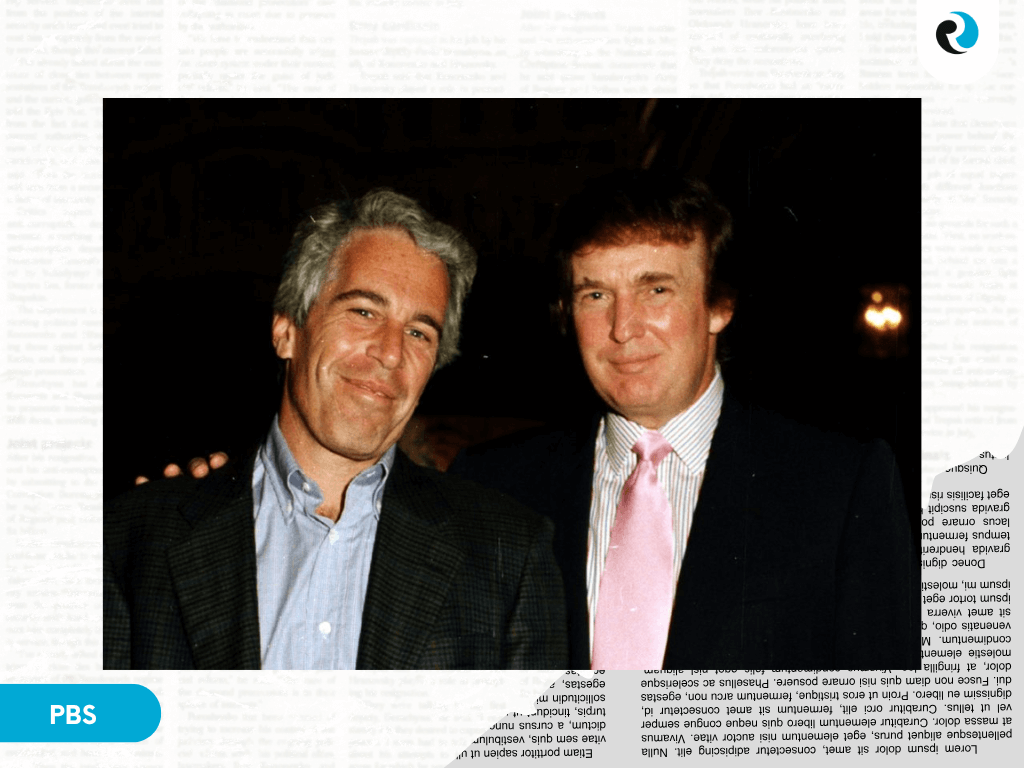
In 2002, Trump described Epstein as “a terrific guy” in an interview with New York Magazine, highlighting his social life and his affinity for young women. The phrase is not new. It has circulated for more than two decades without causing, for a long time, any decisive harm.
What changes now is not the quote, but the context.
In reputational crisis management, the problem is rarely an isolated phrase. It’s the moment it resurfaces and the meaning it acquires in light of what is now known. Time doesn’t always lessen the impact; sometimes it intensifies it.
A statement that might once have been interpreted as social indiscretion now fits into a much more uncomfortable narrative at the pinnacle of political power. Not because it proves a crime—it doesn’t—but because it reinforces a symbolic association that resurfaces at the worst possible moment.
The problem of proximity to power
What makes this new wave of the Epstein case a political and reputational explosion is not an unexpected criminal revelation, but the accumulation of accusations, documents and negligence that, read together, paint a picture of a power system that operated for years without effective controls.

Jeffrey Epstein was formally charged with sex trafficking of minors, systematic sexual abuse, and conspiracy to exploit vulnerable girls and young women.
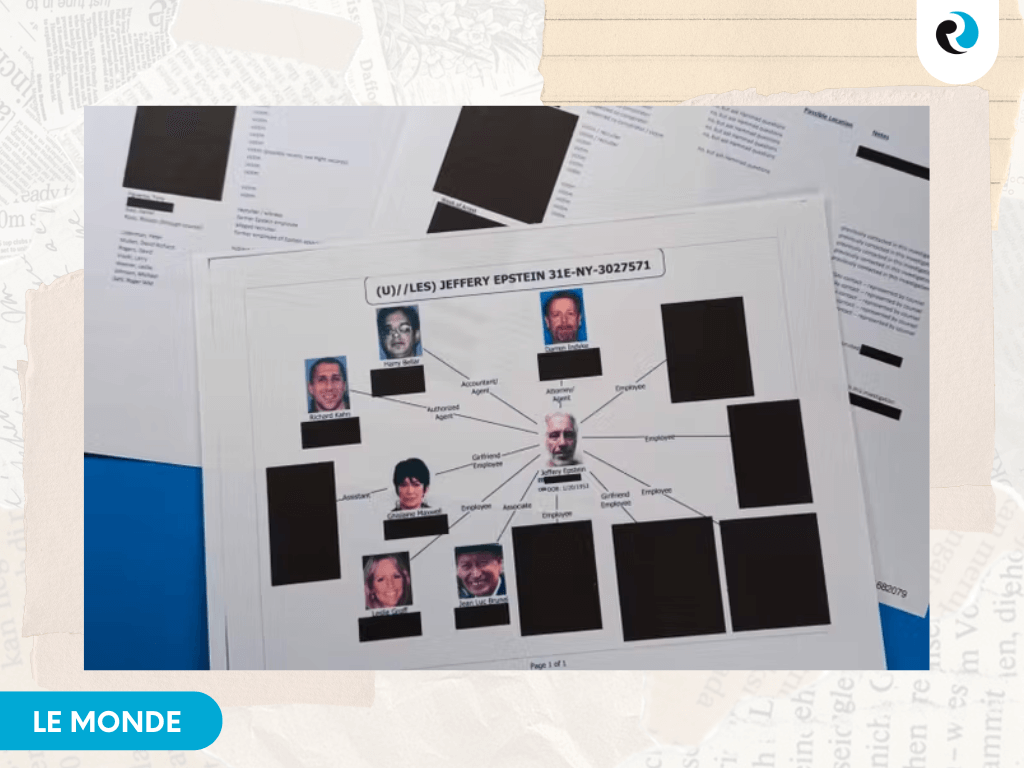
This was not an isolated incident or a private matter, but rather an organized network that operated for years in various states and countries, with the direct collaboration of Ghislaine Maxwell, now convicted. That is the indisputable legal basis of the case. Everything else revolves around that core.
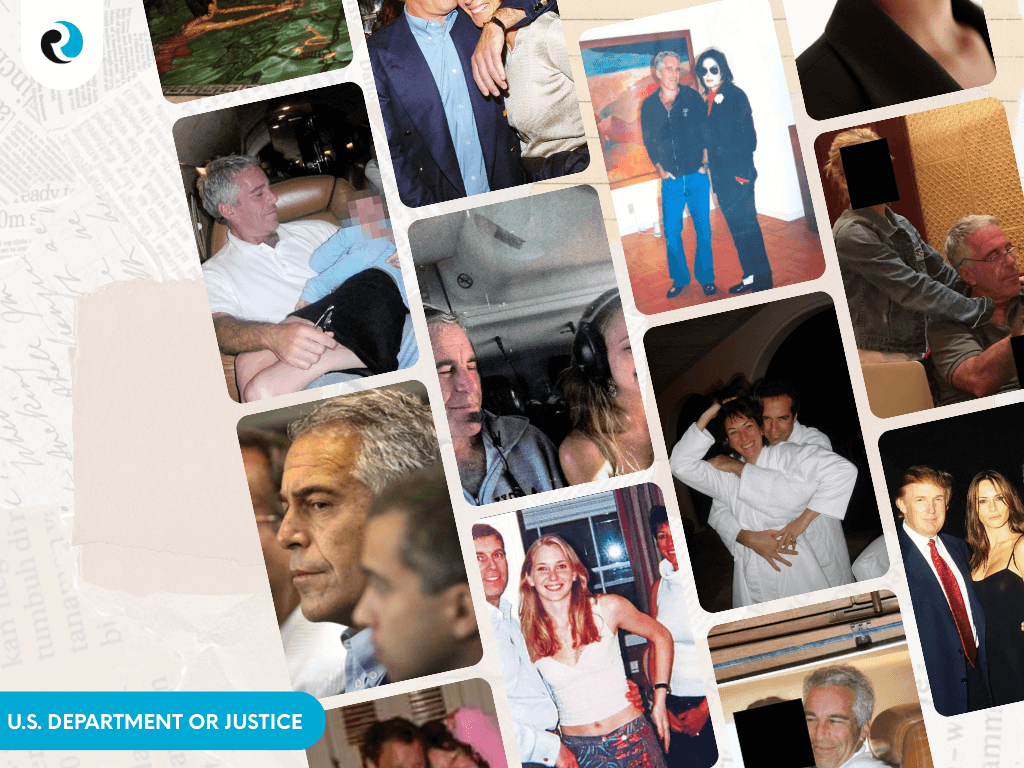
The published files do not bring criminal charges against the individuals mentioned. But they do document something equally explosive: the continuation of social, financial, and political relationships with Epstein even after his 2008 conviction and official registration as a sex offender. Emails, calendars, invitations, and messages reveal a pattern of post-conviction normalcy that is now difficult to justify publicly.
That’s where the real “boom” lies. Not in the accusation of new crimes, but in the realization that the alert system failed—or was ignored—for far too long.
Disinformation, forgeries, and digital burnout
The most serious dimension of this new phase of the Epstein case affects not only those mentioned in the files, but also those who were supposed to be protected by them. The way in which the U.S. Department of Justice carried out the mass release of documents has triggered a parallel crisis, this time focused on institutional responsibility and the irreparable harm to the victims.
For hours—and in some cases days—photographs of nudes, full names, identifiable faces, telephone numbers, bank details, and other extremely sensitive personal information of women who had been exploited when they were minors remained visible.

The law mandating the declassification required strict privacy protections. However, censorship failures were repeated, inconsistent, and in some cases, nonexistent.
This was not a minor slip-up or an isolated error. It was a massive exposure that jeopardized the physical and digital safety of people who had already suffered abuse, generating a new episode of revictimization.
For some survivors, data that had never been public—birth dates, contact numbers, private images—suddenly became accessible in a government database. The damage was not merely symbolic; it was immediate and potentially dangerous.
This incident also introduces a critical dimension in terms of personal reputation. Once sensitive information is circulated, there’s no going back. Files are downloaded, replicated, and recombined. The damage multiplies beyond the reach of any subsequent remediation. For the victims, the cost is devastating.
For institutions, the discrediting is structural. And for the Epstein case as a whole, this ruling adds another layer of toxicity to the narrative : real names mixed with rumors, verified facts alongside human errors, authentic documents coexisting with poorly censored images. All of this erodes trust in the process and contaminates the public’s understanding of the events.
The question that remains
Epstein died in 2019. He will not face any court proceedings. But the system that surrounded him continues to be questioned.
The question that remains open is not who will go to prison. It is another, deeper and less legalistic one: what moral responsibility do those who were part of an ecosystem that normalized the presence of a predator for years assume, and how is a reputation rebuilt when the records, even without convictions, continue to speak.