
Digital reputation no longer begins with visible search results. It begins with autocomplete.
When a user enters a name into the Google search engine, the Google Suggest system anticipates possible associations even before a click occurs.
That prediction is not neutral. It is an algorithmic projection based on patterns of collective behavior.
When a suggestion includes negative terms alongside a proper name, the reputational impact can occur in seconds.
Understanding how to remove negative suggestions from Google requires a technical, strategic, and legal analysis.
What is Google Suggest and how does it actually work?
Google describes its Autocomplete system as an automated mechanism that predicts queries based on popularity, recurrence, and contextual relevance.
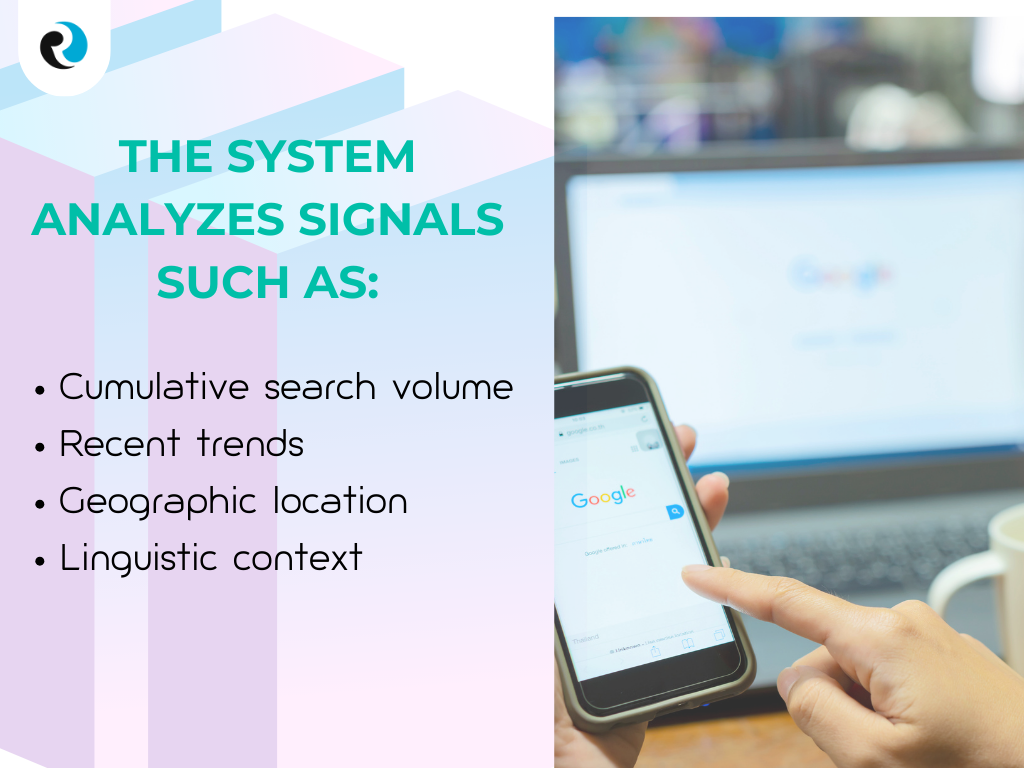
According to Google ‘s official documentation, the system analyzes signals such as:
- Cumulative search volume;
- Recent trends;
- Geographic location;
- Linguistic context.
The key point is to understand that the algorithm does not validate the truth of the associations, but their statistical frequency.
A combination can be consolidated even without a court conviction or verified context.
In digital reputation, statistical probability becomes public perception
The statistical logic behind negative suggestions
Google Suggest responds to aggregate behavior. When a sufficient number of users search for a name along with a specific term, the system learns that association .
This creates a delicate phenomenon: an algorithmic suggestion can be consolidated without prior legal resolution.
The consequence is clear: the damage does not come from a statement, but from an anticipation.
Legal dimension of autocomplete
In the European context, algorithmic associations can conflict with fundamental rights when they are false or disproportionate.
The General Data Protection Regulation (GDPR), overseen by the Spanish Data Protection Agency, recognizes the right to erasure when data processing is not adequate or excessive.
Furthermore, the Digital Services Act promoted by the European Commission establishes additional obligations for far-reaching platforms, strengthening oversight of systemic risks arising from algorithms.
However, not every negative suggestion is automatically eliminable.

When is it feasible to request a direct withdrawal?
Google’s Content Removal Requests allow you to report suggestions that violate its internal policies, for example in cases of:
- Incitement to hatred;
- Sensitive personal information;
- Illegal activity;
- Manifest defamation.
When any of these assumptions are not met, the strategy should be geared towards reconfiguring the algorithmic pattern.
Professional strategy to remove negative Google suggestions
In most scenarios, the solution is not direct elimination, but structural intervention on the digital environment.
The process begins with a detailed technical diagnosis through a Reputation Analysis, which allows the identification of dominant associations and critical points of exposure.
Next, the Sentiment Analysis It evaluates the semantic polarity linked to the name and its possible impact on autocomplete.
Finally, the implementation of Google Alerts ensures constant monitoring to detect new emerging combinations.
The key is to adjust the statistical balance.
Google Suggest responds to dynamic trends. If the trend changes, the suggestion changes.
Semantic reconfiguration and statistical shift
The increase in verifiable positive content—professional publications, institutional mentions, optimized authority content—alters the relative proportion of associated searches.
This process requires narrative coherence, planning, and continuity.
It’s not about reacting, but about rebuilding.

Strategic impact for companies and executives
For business owners, executives, and public figures, a negative suggestion can influence:
- Investment evaluations;
- Recruitment processes;
- Reputational risk analysis;
- Institutional trust.
In corporate contexts, algorithmic anticipation conditions real human decisions.
Digital reputation has become a strategic asset whose management requires a technical approach.
Conclusion: Deletion is not enough; reconstruction is necessary.
Removing negative Google suggestions is not an isolated act or a superficial intervention. It is a process that combines:
- Deep technical diagnosis;
- Appropriate legal assessment;
- Strategic semantic reconfiguration;
- Constant monitoring.
Digital reputation depends not only on what is published, but also on what the algorithm anticipates.
When autocomplete influences public perception, the professional response is not to delete, but to reorganize the digital ecosystem that has generated that association.
That’s the difference between an improvised reaction and a high-level reputational strategy.
Frequently Asked Questions (FAQ)
No. Only when there is a violation of internal policies or a verifiable legal breach.
It depends on the historical search volume and the strategic work carried out. In complex cases, it may require several weeks.
Yes. Aggregate behavior is the basis of the predictive model.
Yes, if the statistical pattern reactivates. Continuous monitoring is essential.
Not when there is a significant reputational impact. An incorrect intervention can reinforce the negative association.