
Online sexual blackmail can suddenly put your private life, relationships and professional credibility at risk. Knowing what to do in the first few hours is essential to reduce the risk of intimate images being shared and protect your reputation.
In brief
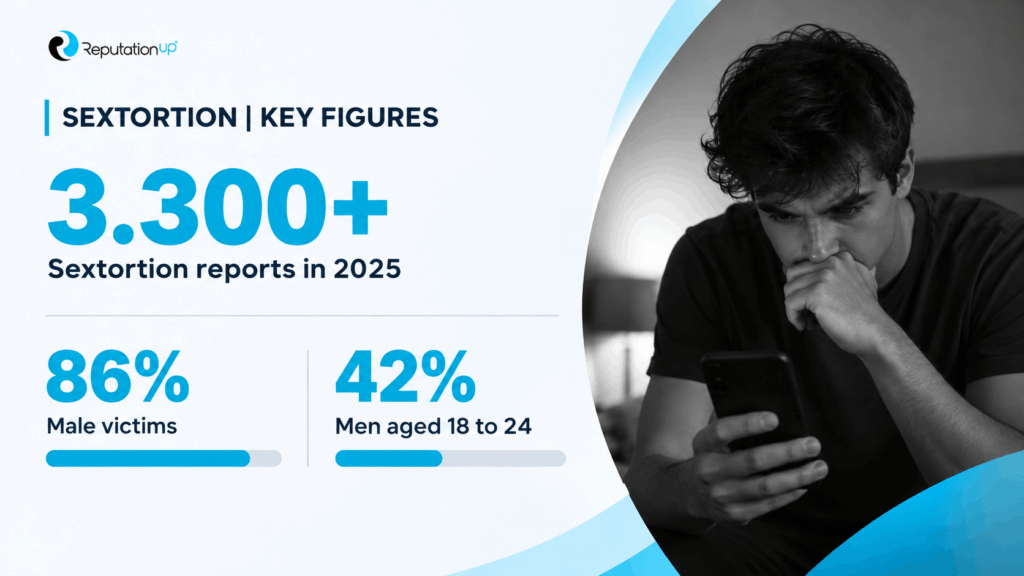
- In 2025, Australia’s online safety regulator received more than 3,300 reports of sextortion, 86% of which came from males.
- Receiving a threat does not mean the images have already been shared. Paying the ransom offers no guarantees and may expose the victim to further financial demands.
- Through its Stop Sextortion service, ReputationUP offers specialist assistance to assess digital exposure and identify ways to protect the victim.
The blackmailer has just sent you a screenshot of your contacts. They claim to have your intimate photos and give you just a few hours to pay before sending them to your family, friends or colleagues.
You do not know whether they have already contacted anyone or whether they will keep their promise to delete the images once they receive the money.
Only minutes earlier, that conversation seemed to belong entirely to your private life. Now you fear it could jeopardize everything you have built.
This is one of the situations a victim of sextortion may face, a form of cyber extortion that uses sexually explicit material to obtain money or force someone to comply with specific demands.
When a Private Conversation Turns Into Blackmail
In 2025, Australia’s online safety regulator, the eSafety Commissioner, received more than 3,300 reports of sextortion, 86% of which came from males. Men aged 18 to 24 accounted for 42% of the total.
The phenomenon knows no geographical boundaries.
In May 2025, the U.S. Department of Justice announced the arrest of four men in Côte d’Ivoire accused of participating in an international sextortion and money laundering network that allegedly targeted thousands of people across several countries.
Behind what appears to be a casual acquaintance on social media or a dating app may lie a criminal organization.
Victims believe they are sharing an intimate moment with someone who is interested in them. Only later do they discover that this trust may have been cultivated to extort money from them.
This is how an apparently harmless conversation can turn into a case of online sextortion.
What Should You Do in the First Few Hours of Sextortion?
When the first demand for money arrives, the blackmailer may impose a very short deadline. Urgency fuels fear and increases the risk of impulsive decisions.
Here are five steps to take immediately:
- Do not pay the ransom or send any more intimate material.
- Preserve the evidence: save screenshots of threats, conversations, profiles and payment requests.
- Stop communicating and block the blackmailer after collecting the evidence.
- Secure your accounts and limit the visibility of your personal information.
- Seek support from ReputationUP: through its Stop Sextortion service, you can receive confidential assistance to assess your digital exposure and identify the most appropriate response strategies, even before the images are shared.
If you have already paid, do not make any further payments, keep the transaction receipts and contact your bank promptly.
Will the Blackmailer Really Share Your Intimate Photos?
The blackmailer may have shown you a family member’s profile, your Facebook friends list or the name of the company you work for. They may even have sent you a screenshot of a conversation that appears ready to be forwarded.
These details make the threat credible, but do not necessarily prove that the images have already been shared.
It is important to distinguish between three situations:
- A threat to share the material, with no evidence of publication
- Sending the material to one or more private contacts
- Publishing the images on social media, websites or other platforms
“Fear of losing control over one’s own image is one of the blackmailer’s main tools of coercion. Distinguishing between what is being threatened and what has actually happened is the first step towards developing an effective response strategy,” explains Andrea Baggio, founder and Global CEO of ReputationUP Group.
The Price of Silence
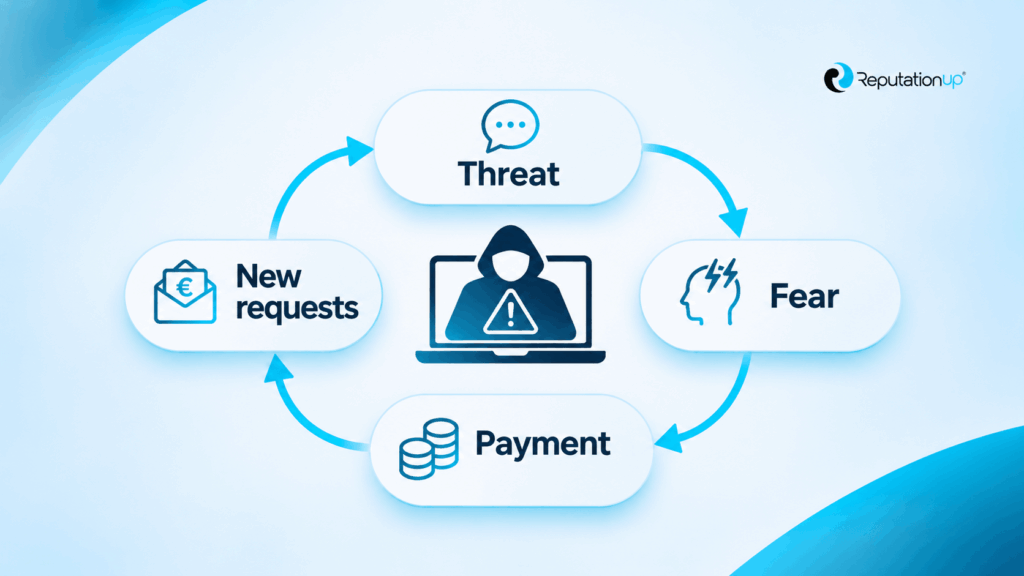
Five hundred euros today, another thousand tomorrow. What initially seems like an acceptable amount to protect your privacy can turn into a series of financial demands.
In February 2025, Europol updated its guidance on online sexual blackmail, highlighting that some victims who had paid faced further demands for money or had their intimate material shared anyway.
Paying does not buy the blackmailer’s silence. It means relying on a promise you cannot verify. Financial loss can therefore compound the risk of reputational damage without eliminating the threat.
Your Network of Contacts Becomes the Target
Consider how much information about your life is accessible through a simple online search.
LinkedIn reveals your professional history, Instagram shows the people you spend time with and Facebook can reveal your family connections.
Seemingly harmless information that, in the hands of a blackmailer, can become a means of coercion.
Protecting your digital reputation also involves controlling this information. To protect yourself from sextortion, you should limit the visibility of your contacts, make your social media profiles private and hide personal contact details that are publicly available.
If you suspect unauthorized access, change your passwords, review active sessions and enable two-factor authentication. These precautions will not erase information the blackmailer has already collected, but they can reduce the risk of further exposure.
How ReputationUP Responds to Sextortion Cases
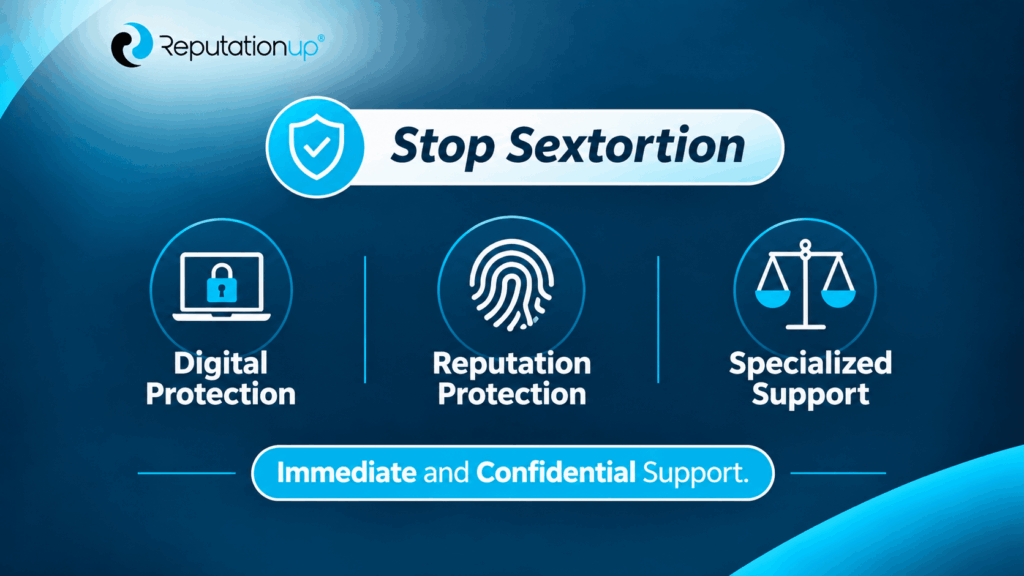
Dealing with sexual blackmail means facing simultaneous threats to your privacy, digital security and reputation. Through its Stop Sextortion service, ReputationUP offers multidisciplinary assistance, combining technological, reputational, legal and emotional support.
The response is tailored to the circumstances of the blackmail and includes:
- Immediate assistance: case assessment and evaluation of the threats received.
- Harmful links removal: measures aimed at removing intimate photos, videos and other content shared without consent.
- Tracing and reporting the blackmailer: identification efforts and support in reporting the perpetrator.
- Digital protection: safeguarding accounts, networks and your presence on search engines.
- Reputation management: strategies designed to contain reputational damage and restore your digital identity.
- Professional emotional and legal support: assistance in dealing with the personal and legal consequences of blackmail.
“Sextortion goes far beyond cybersecurity. It affects the victim’s emotional well-being, personal relationships and reputation. This is why an integrated approach that addresses the different dimensions of blackmail is essential,” emphasizes Andrea Baggio, founder and Global CEO of ReputationUP Group.
Assistance can begin as soon as the first threat is received, while the appropriate response depends on the specifics of the case and the available technical and legal options.
Do Not Let the Blackmailer Make Decisions for You
During a sextortion incident, even a simple notification can become a cause for concern. The fear that someone may have received those images can affect your work, relationships and everyday life.
The deadline imposed by the blackmailer should not dictate your decisions.
If someone is threatening to share your intimate photos or videos, contact ReputationUP for confidential assistance and an assessment of the available options to protect your reputation.
Sextortion FAQs
Avoid negotiating. Preserve evidence of the threats and financial demands, then stop communicating and block the contact.
Assess the evidence you have already received without asking for further proof or sending additional material. A threat may also rely on nonexistent or manipulated images.
Do not make any further payments. Keep your receipts, contact your bank, report the extortion and seek specialist assistance.
Limiting the visibility of personal information can reduce further exposure. However, there is no way to guarantee that contacts already obtained will not be used.
Yes. You can request a confidential assessment of the risk and available response options even if you have only received a threat.