
A company can have its finances in order and still find its banking operations disrupted. Sometimes the problem is not money, but information about the business or its directors—information the bank may know before the business owner does.
At a glance
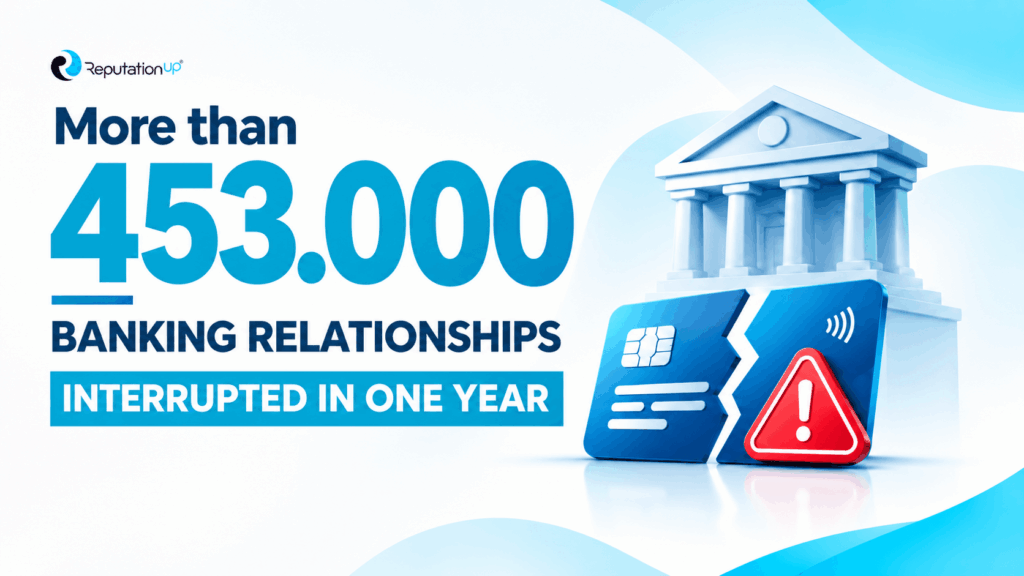
- 453,230 banking relationships terminated in one year: according to figures published by the UK Financial Conduct Authority in 2026, terminations associated with financial-crime risks increased by approximately 11%.
- Reputation can influence banking decisions: negative news, judicial information and data held in systems such as World-Check can contribute to risk assessments, even when a company has strong financial statements.
- Action is possible: through its financial reputation remediation service, ReputationUP examines potentially harmful information and assesses options for correction, updating or deletion.
A bank transfer that fails to go through. A supplier waiting for payment. A call to the bank that, instead of resolving the issue, triggers further checks.
For a business owner, a frozen business bank account can quickly disrupt the entire operation — even when the company is solvent, its accounts are in order and there are no liquidity problems.
How can a reliable business suddenly become a customer considered high-risk?
The answer may lie outside its financial statements. Financial institutions also examine information about the company, its directors and beneficial owners. Some of that information comes from news published years earlier, digital archives or specialist databases.
This is where financial reputation can become a tangible operational problem.
More than 453,000 banking relationships terminated in one year
453,230 customer relationships terminated over twelve months. That is the figure reported in January 2026 by the Financial Conduct Authority (FCA), the UK financial regulator.
During 2024–2025, the institutions covered by the reported data ended more than 453,000 relationships for reasons linked to financial-crime risk, compared with 408,218 the previous year — an increase of approximately 11%.
For a business, the question is practical: how far can a risk assessment affect the continuity of its banking relationships?
In some cases, the institution may request additional documents or conduct further checks. In others, it may restrict transactions or decide to end the relationship. Internationally, reducing exposure to certain risk categories is often described as de-risking. Reputational information may also influence these decisions.
When a World-Check profile reaches the bank
Two Italian entrepreneurs, an international database and a terminated banking relationship.
This was the case reported in October 2024 by Wired Italia, highlighting the potential economic consequences of information collected in financial screening systems.
At the centre of the dispute was judicial information concerning the two entrepreneurs, recorded in their World-Check profiles and consulted by a Swiss bank.
According to the journalistic account, the bank decided to terminate the relationship and sell the individuals’ share portfolio, allegedly causing financial losses. The matter reached the courts amid disputes over the processing and dissemination of the data.
What matters most is the information trail: a judicial record enters a specialist database, becomes associated with a profile and can be consulted by those assessing a customer’s reliability. From that point, its impact may extend far beyond the original publication.
“The hardest reputational risk to detect is the one a business owner cannot see. An old news story, incomplete information or a misinterpreted association can enter banking assessment processes without the person concerned knowing it exists. That is why it is essential to understand what information is linked to one’s financial identity.” — Andrea Baggio, CEO of ReputationUP
World-Check and the information that can influence banks
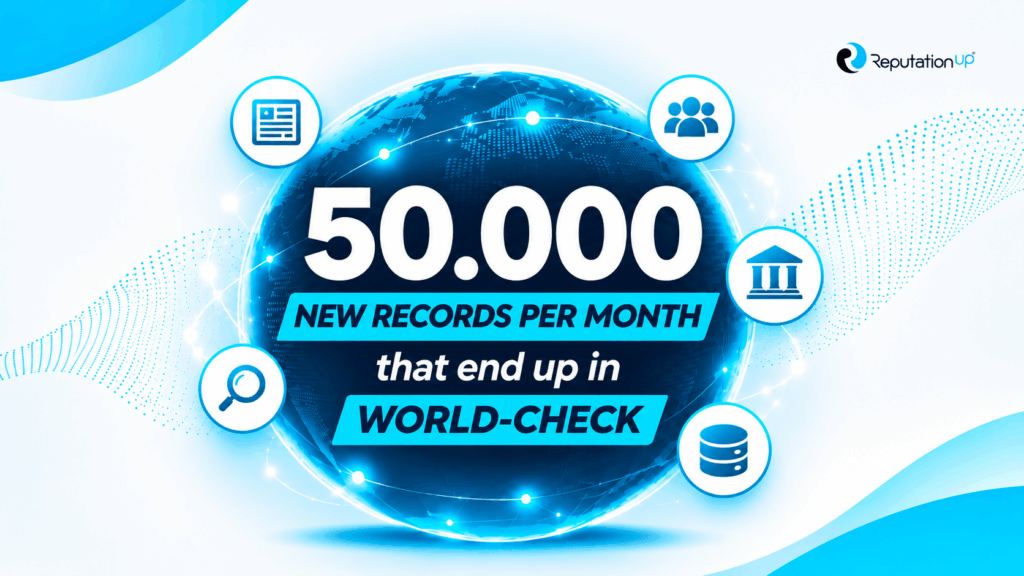
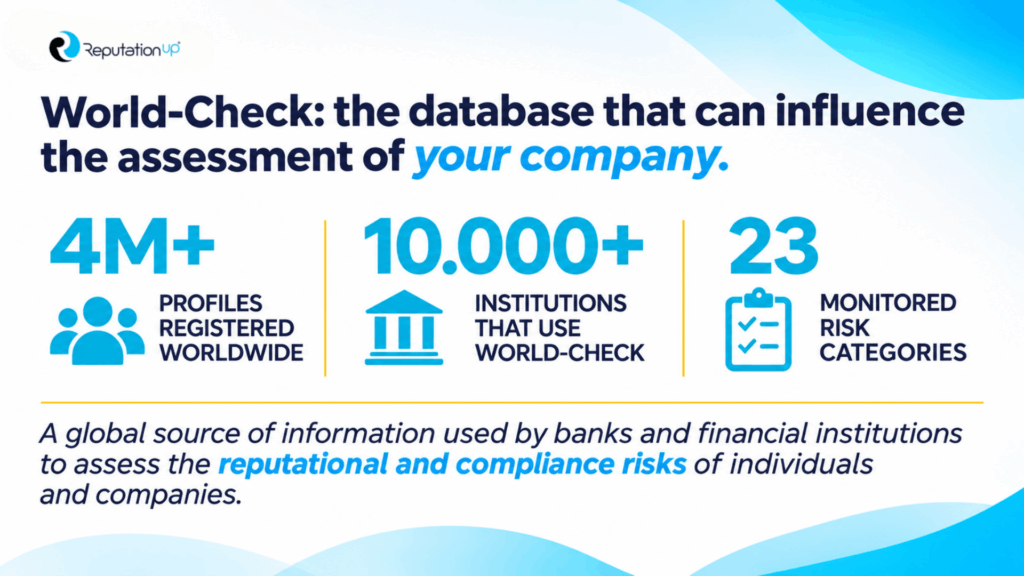
Banks are required to know their customers. Alongside corporate and financial documents, they may use specialist platforms such as World-Check, part of London Stock Exchange Group’s (LSEG) risk intelligence services.
The system brings together information from public and specialist sources to support screening, due diligence and financial-risk prevention.
Among the material examined is adverse media: negative news that may be relevant to assessing risk.
Consider a business owner investigated in proceedings that are later discontinued. The initial news remains online, while the final decision receives far less attention. During a check, a financial institution may encounter an incomplete picture.
A news report can be authentic and yet no longer accurately reflect a person’s current circumstances. World-Check supplies information for screening; financial institutions are responsible for interpreting the results and making decisions about their customer relationships.
Why might a solvent company have its bank account frozen?
A bank’s assessment goes beyond financial statements. Institutions must comply with Know Your Customer (KYC) obligations and Anti-Money Laundering (AML) procedures.
Checks may cover the origin of funds, transactions, corporate structure and individuals connected to the business. Possible reasons for a banking restriction include:
- Incomplete documentation: corporate or beneficial-ownership information that needs updating.
- Transactions requiring review: financial movements that call for additional checks.
- Court or tax orders: measures that may restrict access to funds.
- Adverse reputational information: news or alerts that contribute to an overall risk assessment.
In February 2025, the Financial Action Task Force (FATF) updated its standards to strengthen the proportionality of anti-money-laundering measures and help prevent unjustified financial exclusion.
For businesses, the distinction is crucial: checks should be based on concrete evidence and an appropriate assessment of risk. Where reputational information is involved, understanding its origin and verifying its accuracy becomes essential.
How to tell whether your financial reputation is at risk
The first obstacle is often a lack of information. A business owner may know the company’s financial position in detail while remaining unaware of the news, alerts or associations linked to their name in screening systems.
Four checks can help establish the facts:
- Clarify the situation with the bank: determine whether the restriction affects a single transaction, the entire account or the continuation of the relationship.
- Review public information: identify judicial news, negative articles, namesakes and outdated references.
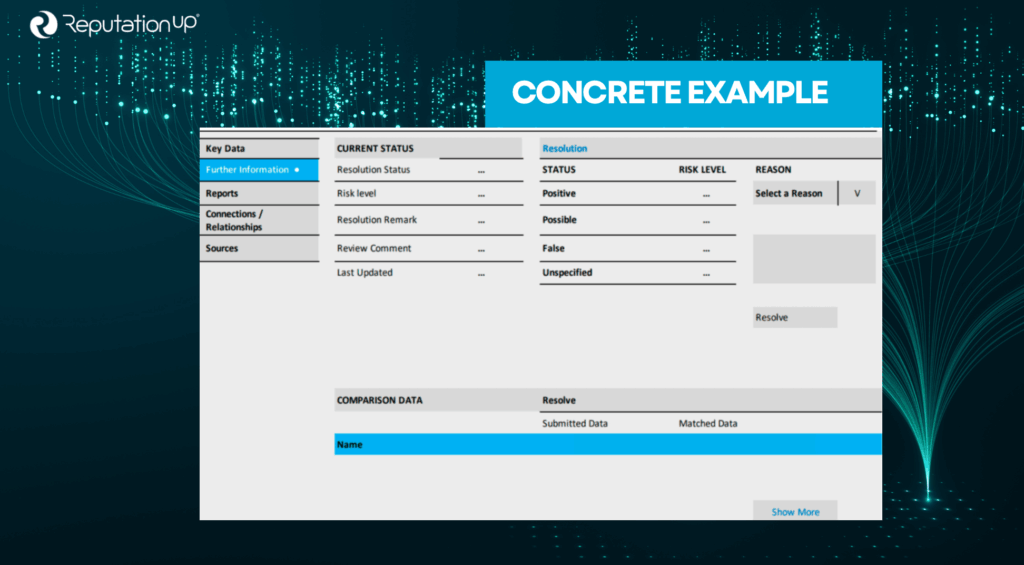
- Assess the reputational profile: a reputational risk analysis can identify negative news, corporate links and potentially critical information, including material that may appear in World-Check.
- Gather documentary evidence: court decisions, certificates and other records that can support challenges to inaccurate information.
These checks help distinguish documented issues from assumptions and identify matters that may be addressed.
Financial reputation remediation: how ReputationUP helps
Financial reputation remediation is a process of analysis, documentary verification and intervention concerning reputational information, designed to identify and address potential issues.
- Reputational audit: identifies negative information and potential issues in the profiles examined.
- Source verification: traces the origin of content and assesses its accuracy, currency and relevance.
- Evidence gathering: organises documents that demonstrate errors, updates or inconsistencies.
- Remediation: assesses and prepares substantiated requests for correction, updating or deletion where grounds exist.
- Monitoring: tracks how the information and the outcomes of interventions evolve.
The work may also include assessing options for removing harmful online links and managing negative information online, subject to applicable requirements.
Documentation is decisive: the closure of an investigation, an official correction or a case of mistaken identity can change the meaning of information used in an assessment.
“Financial reputation remediation is not about erasing inconvenient information. It is about checking that the data used to assess a business is accurate, up to date and properly understood in context. Every intervention must begin with rigorous documentary analysis, because only verifiable evidence can support a credible request for correction.” — Andrea Baggio, CEO of ReputationUP
What the bank knows about your business can make a difference
A company protects its stability by managing its finances, risks and commercial relationships. The information used by financial intermediaries deserves equally careful attention.
Understanding your reputational exposure helps identify problems, document possible errors and act before they affect strategic relationships.
Through its financial reputation service, ReputationUP supports companies and entrepreneurs in analysing potentially harmful information and assessing available measures.
Request a financial reputation analysis to identify potential issues and understand how to address them.
Frequently asked questions
Banks assess factors beyond financial health, including AML obligations, corporate documentation, transactions and risk profiles. The specific reason should be clarified with the institution.
Information in World-Check may contribute to financial institutions’ risk assessments. Its significance depends on the content, context and checks carried out by the bank.
It can commission a reputational audit, examine public information and check for possible profiles in specialist databases, in accordance with applicable access procedures.
Where there are valid grounds, requests may be made for correction, updating or deletion. Each request requires an individual assessment and, where appropriate, supporting evidence.
Correcting inaccurate or incomplete information may help clarify factors relevant to the bank’s assessment. The decision about the banking relationship remains with the financial institution.